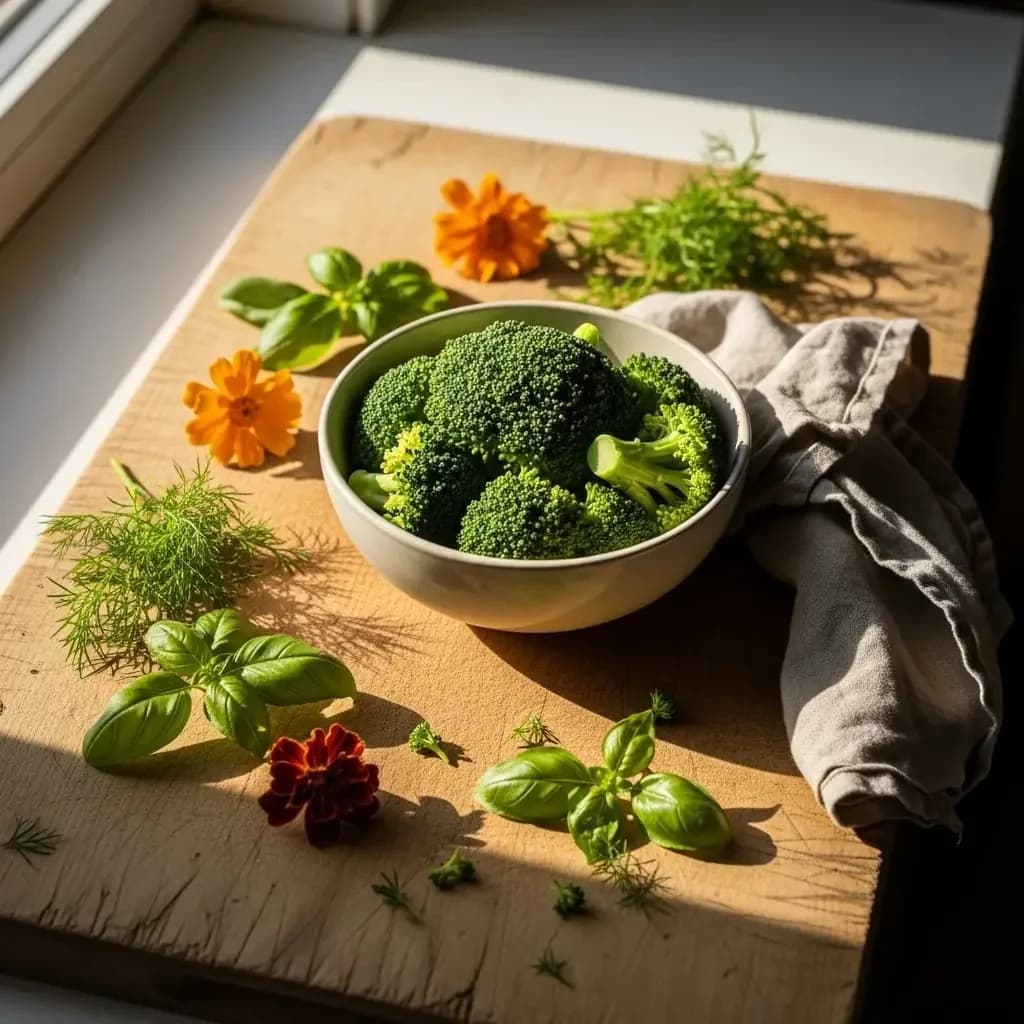
Broccoli Companion Plants: What to Grow (and Keep Far Away)
When Adam was eight, he decided he would only eat broccoli he grew himself. That is a very Adam thing to do. We had this little raised bed on our balcony in Singapore, and I crammed in two broccoli plants, some basil, and a tomato seedling because they all looked nice together. The tomato grew enormous. It shaded the broccoli completely. We got zero heads that season. Adam cried. I cried a little too, if I am honest. That disaster taught me more about companion planting than every gardening book I had ever read.
Quick Answer
The best companion plants for broccoli are dill, marigolds, nasturtiums, garlic, and thyme. They deter cabbage worms, attract beneficial insects, and avoid competing for the calcium and nitrogen broccoli needs. Keep other brassicas (cabbage, cauliflower, kale) away from broccoli, and never plant fennel nearby. It actively poisons its neighbours.
What Plants Grow Best Next to Broccoli
Broccoli has two big problems: pests and heavy feeding. The right companions address both without stealing resources.
Dill
The most versatile option. Its scent confuses and repels the cabbage moths that lay eggs on your broccoli leaves. When you let it flower, those blooms attract parasitic wasps that hunt and kill cabbage worms. Most guides mention one of these mechanisms, rarely both. Let at least one stem go to flower and leave it alone.
Marigolds and nasturtiums
Work as trap crops. They draw caterpillars away from your broccoli heads onto themselves. The pests choose the trap. Marigold root secretions also suppress soil nematodes.
Thyme, onion, and nasturtium (together)
Tested in an Iowa State University study that measurably reduced cabbage looper and imported cabbageworm counts in broccoli plots. That is the strongest peer-cited evidence we have for companion planting with broccoli. Grow all three and you have a real pest barrier.
Garlic
Repels aphids, snails, flea beetles, and deer. Research points to allicin, the compound garlic produces when its cells are disturbed. One border row around the bed goes a long way.
Beets
My personal favourite pairing. Broccoli pulls calcium from the soil like it cannot get enough, while beets tolerate low-calcium conditions just fine. Their root zones barely overlap. Plant them at least 15 inches apart and they leave each other alone.
Bush beans
Fix atmospheric nitrogen into the soil as they grow. Since broccoli is a heavy nitrogen feeder, the beans are essentially working for free to keep it fed. This benefit builds over a full growing season.
Lettuce and spinach
Have shallow roots that do not interfere with broccoli's deeper root system. They also act as living mulch, keeping soil cool and moist. Alfi always asks to plant chamomile nearby too, and honestly the flowers attract enough hoverflies that I have stopped arguing about it.
Calendula
Lures aphids heavily, which then draws in ladybugs. The plant becomes a beneficial insect hub on purpose. One cluster in a corner of the bed does the job.
What Cannot Be Planted Next to Broccoli
This is where most beginners make mistakes, and where I made mine.
Other brassicas (cabbage, cauliflower, kale, Brussels sprouts)
They share the same pests and the same diseases, including clubroot, which can survive in soil for years. Planting them together doubles your pest pressure. Some gardeners plant Chinese cabbage deliberately as a trap crop for cabbage root flies, but that is a calculated move, not a companion pairing.
Fennel
In a category of its own. It releases allelopathic compounds into the soil that inhibit root growth in neighbouring plants. It is not just a bad companion, it is chemically hostile to almost everything around it. Keep fennel in a container, away from the vegetable bed entirely.
Tomatoes
My hard lesson. They grow fast, grow tall, and shade everything around them. They also prefer warmer, drier conditions than broccoli. They pull in opposite directions on every requirement.
Strawberries
Share susceptibility to verticillium wilt with broccoli. Planting them together raises disease pressure on both.
Corn, squash, and peppers
Either too large, too sprawling, or too competitive for space and nutrients. Broccoli needs airflow and light. These crops close in on it.
What Can Be Intercropped with Broccoli
Intercropping means using the gaps between broccoli plants while they establish. Broccoli takes 70 to 100 days to head up, so those spaces are usable for weeks.
Radishes
Germinate fast, are ready in about four weeks, and are harvested before broccoli ever needs the space. They also loosen compact soil around broccoli roots.
Spinach and lettuce
Shallow roots, fast growth, done before broccoli takes over. Easy intercrop that pays for itself.
Chives
Fit into corners easily. Deter aphids and cabbage moths. Small footprint means they fill gaps nothing else would use.
The Spacing Rule Most Beginners Skip
Fifteen inches minimum between broccoli plants and their companions. Most guides mention it somewhere, but beginners almost never follow it.
When I crowded that tomato too close, it was not just the shading that killed the broccoli. Roots compete for the same pool of calcium and water. Overcrowding creates that competition even between plants that would otherwise be fine neighbours. Give companions real space. That is the whole game.
Frequently Asked Questions
Does dill actually repel cabbage worms?
Yes, on two levels. The scent of dill confuses the cabbage moths that lay eggs on brassica leaves. When dill flowers, its blooms attract parasitic wasps that hunt and parasitise the cabbage worms that do hatch. Both mechanisms together make it worth growing even in a small bed.
Can you plant broccoli and cauliflower together?
It is not recommended. Both are brassicas with the same pest and disease vulnerabilities, including clubroot. Planting them together concentrates your risk. If one plant gets an infestation, the other is immediately exposed. Keep them separated by a few feet, with something aromatic between them.
How far apart should companion plants be from broccoli?
At least 15 inches. This prevents root competition for calcium and water. Broccoli is a heavy feeder and needs that soil zone to itself.
What are the bad companion plants for broccoli?
Fennel is the worst because it releases allelopathic compounds that inhibit root growth in neighbouring plants. Other brassicas share all the same pests and diseases. Tomatoes, strawberries, corn, squash, and peppers all have needs or habits that compete with broccoli rather than supporting it.
What to plant with broccoli to keep bugs away?
Dill, thyme, garlic, and rosemary all deter the insects that target broccoli. An Iowa State University study confirmed that thyme, onion, and nasturtium together reduced cabbage looper and imported cabbageworm damage in broccoli plots. Marigolds and nasturtiums work as trap crops. Letting aromatic herbs flower is key: the blossoms attract parasitic wasps and hoverflies that keep pest populations under control.
References
Iowa State University companion planting study (thyme, onion, nasturtium on cabbage loopers): cited by The Spruce (Nadia Hassani, updated 2025) and Old Farmer's Almanac (Catherine Boeckmann, 2026).
USDA research on alyssum attracting hoverflies that prey on aphids: Old Farmer's Almanac companion planting chart, 2026.
Garlic allicin and pest repellency: Gardenary, citing horticultural research on allicin compounds.
Beet and broccoli calcium compatibility: Gardeners Path (2020), MyPlantIn (2023).
Fennel allelopathy: established plant science; cited as horticultural consensus by The Spruce, Gardeners Path, Gardenary.
15-inch spacing rule: Gardeners Path (2020), MyPlantIn (2023).
Bush bean nitrogen fixation: GrowOrganic (2026); general legume science.
Calendula aphid lure and ladybug attraction: Gardenary (2025).