How to Blanch Broccoli
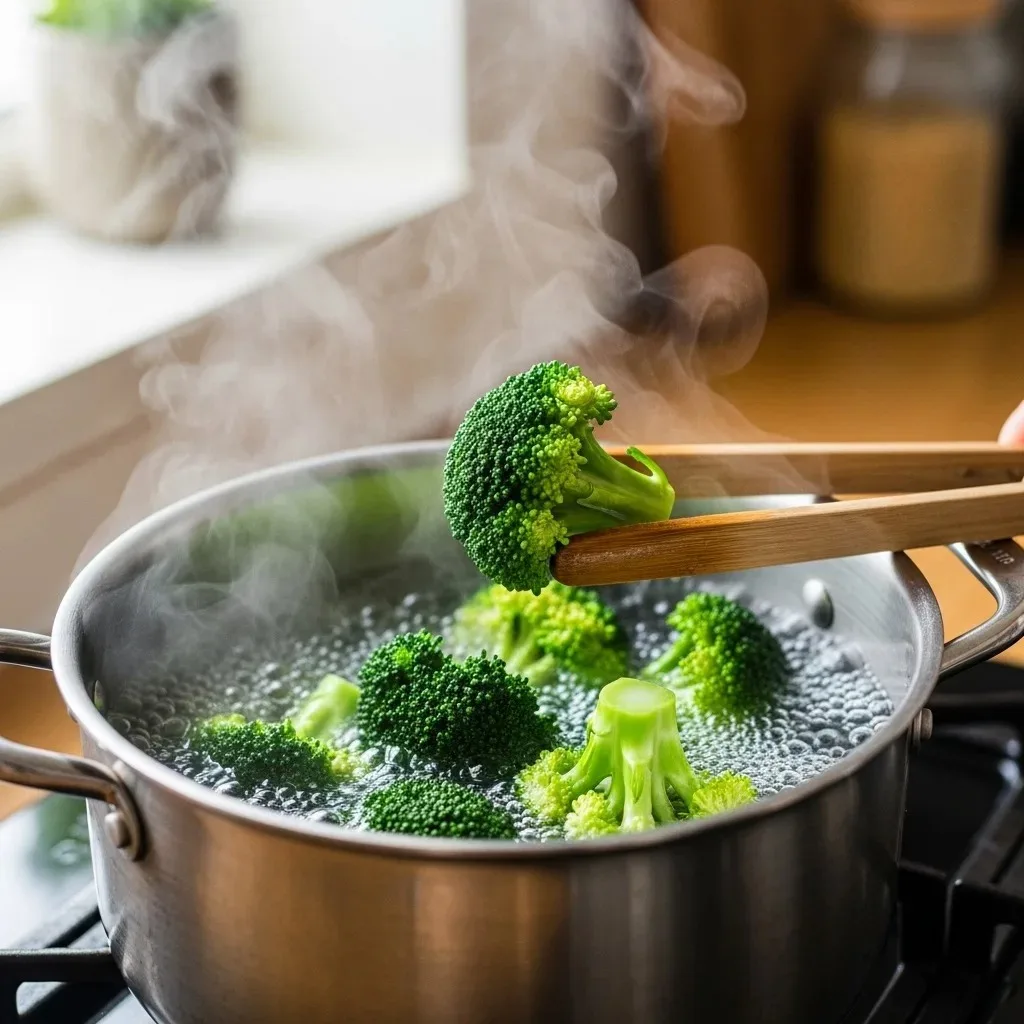
Adam refused to eat broccoli for almost a year. I tried roasting it, steaming it, hiding it in pasta. He picked every floret out without a word. Then one night I made it properly blanched for the first time: barely a minute in salted water, straight into ice, finished with a squeeze of lemon and raw garlic grated over the top. He ate it standing at the kitchen counter before I could even plate it. That moment is why I keep making it this way.
Key Takeaways
- ✓ Blanching time depends on what comes next: 30 to 45 seconds for stir fry, 60 to 90 seconds for eating now, 2 to 3 minutes before freezing
- ✓ Salt the water generously: think pasta-water level, not tap-water level
- ✓ The ice bath is not optional; it locks in the color and stops the cooking
- ✓ Overcrowding the pot is the most common mistake; work in batches
- ✓ Blanched broccoli keeps up to 5 days in the fridge when properly dried
Step-by-Step Instructions
What you need: large pot, slotted spoon or spider, large bowl, ice, salt, broccoli florets
- 1.Prepare the ice bath first. Fill a large bowl with ice and cold water and set it right next to the stove. You want it ready before the broccoli hits the water.
- 2.Bring a large pot of salted water to a rolling boil. Add enough salt that the water tastes faintly like the sea. A flat, under-salted blanch produces flat-tasting broccoli.
- 3.Cut broccoli into even florets. Uniform size means even cooking. Split any thick stem pieces lengthwise so they match the floret tops.
- 4.Add broccoli in a single batch. Do not overcrowd. If you have a lot, work in two rounds. Too much at once drops the water temperature and you get dull, soft florets instead of vivid, crisp ones.
- 5.Blanch 60 to 90 seconds. Watch the color. The moment it shifts to vivid neon green, that is your signal. For stir fry prep, pull it at 30 to 45 seconds. For freezing, go 2 to 3 minutes.
- 6.Transfer immediately to the ice bath. Use a slotted spoon and move fast. Every extra second in hot water is more cooking.
- 7.Cool 2 minutes, then drain and dry. Lift the broccoli out, shake off the water, and spread it on a kitchen towel. Pat it dry. This matters for storage. Moisture is what makes it go soggy in the fridge.
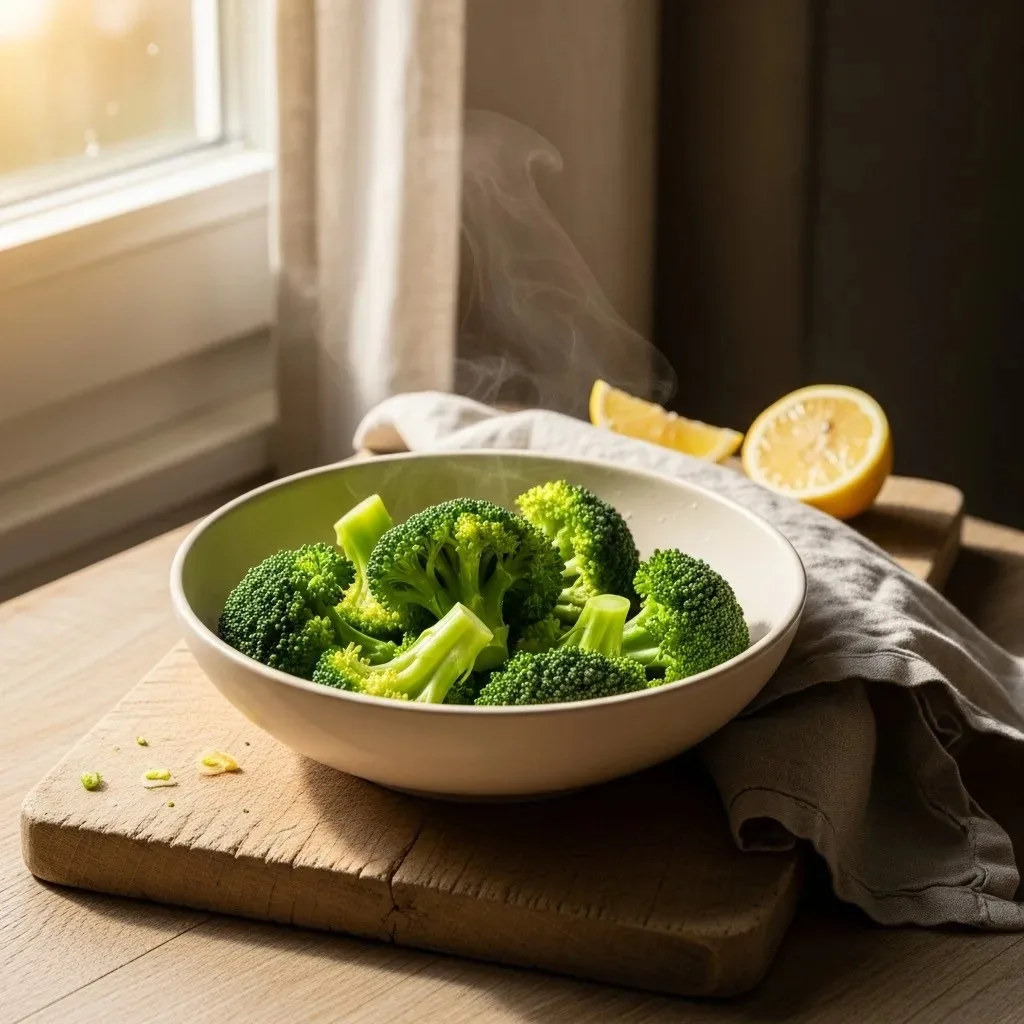
Why Does Broccoli Turn Bright Green When Blanched?
Raw broccoli has chlorophyll locked inside its cells. Heat causes those cells to expand, releasing pockets of air and pushing chlorophyll closer to the surface. The color intensifies almost immediately. You get that luminous neon green that looks nothing like the olive you see on overcooked broccoli.
Leave it in too long and chlorophyll breaks down into pheophytin. That is the grey-olive color you know from school cafeterias. The ice bath stops this breakdown at exactly the right moment.
One note on nutrients: blanching does reduce sulforaphane bioavailability compared to raw or steamed broccoli. Broccoli still delivers good amounts of vitamin C (89.2mg per 100g raw) (USDA FDC 170379), vitamin K, fiber, and folate (USDA FDC 170379). But if you want maximum sulforaphane, lightly steam or eat it raw. Blanching is the right choice for texture, color, and freezing prep.
How Long Should You Blanch Broccoli?
This is the question that confuses everyone, and the answer is genuinely context-dependent. No single time is right for all uses.
| What comes next | Blanching time |
|---|---|
| Stir fry or wok dish | 30 to 45 seconds |
| Eating now, cold salads | 60 to 90 seconds |
| Freezing | 2 to 3 minutes |
For freezing, the longer time matters. Research suggests a minimum of 3 minutes for broccoli florets before freezing so that enzyme inactivation goes all the way through the floret. (USDA Complete Guide to Home Canning and Preserving)
Do You Have to Use an Ice Bath?
Yes. Residual heat in the broccoli keeps cooking it after you drain it. Color fades within minutes and the texture softens. The ice bath stops everything instantly.
No ice? Run cold tap water directly over the drained broccoli for 60 seconds. It is less effective because most tap water is not cold enough to stop cooking as fast, but it is better than nothing.
Common Blanching Mistakes
Frequently Asked Questions
Do you salt the water when blanching?
Yes, generously. Think pasta-water level. Under-salted water produces flat-tasting broccoli even after you finish it with lemon or garlic.
Why do you put broccoli in ice water after blanching?
The ice bath stops cooking instantly. Without it, residual heat keeps working after you drain. Color fades, texture softens. The ice bath locks in the neon green and the crisp-tender bite.
How do you blanch broccoli without ice?
Run cold tap water directly over the drained broccoli for at least 60 seconds. It works, but slower than ice. If you can plan ahead, fill a bowl with water and put it in the freezer for 10 minutes before you start cooking.
Do you need to blanch broccoli before freezing?
Yes. Raw broccoli contains enzymes that break down cell walls even at freezer temperatures. Unblanched frozen broccoli goes mushy and loses color after a few months. Blanching deactivates those enzymes. Research suggests a minimum of 3 minutes at a full rolling boil for florets. (USDA Complete Guide to Home Canning and Preserving)
One Trick Worth Trying
I picked up the sesame oil tip from @justonecookbook, a Japanese home cooking account I have followed for years. A few drops of sesame oil in the blanching water creates a light coating on the broccoli as it cooks, seals in the flavor slightly, and gives it a gentle nutty aroma. It also extends fridge freshness to 3 to 4 days versus the usual 2 to 3. I tried it once and kept doing it.