
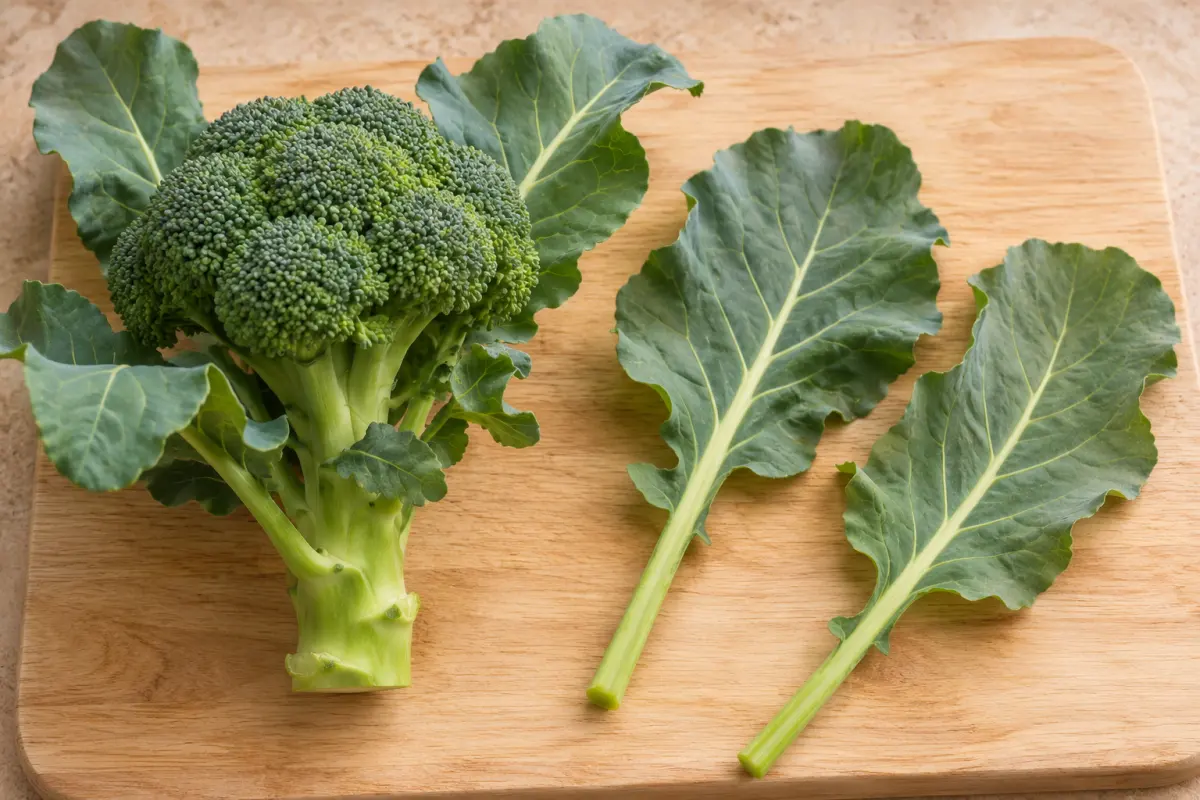
A broccoli head can arrive with just a few little leaves tucked around it. A plant in the garden is another story: broad leaves, thick ribs and far more green than the familiar crown. Before trimming all of that away, it helps to know which parts belong in the kitchen.
Can you eat broccoli leaves?
That answer applies to broccoli, not to every large leaf growing nearby. A photograph, an app suggestion or a resemblance to a brassica is not sufficient identification for eating an unfamiliar plant. Buy leaves sold as food or use plants whose identity and growing history you know.
Which leaves should you choose?
The small leaves near a shop-bought broccoli crown and the larger leaves on a cultivated plant are both part of the same vegetable. The larger ones simply ask for a little more preparation. Do not assume that an oversized rib will soften as quickly as the thin blade around it.
University of Minnesota Extension describes broccoli's upright blue-green leaves and confirms their culinary use. Appearance can vary between cultivars. Use that information to understand an already identified crop, not as a stand-alone foraging key.
Pick leaves without slime, mold or extensive damage. Keep leaves with an unknown pesticide history out of the kitchen. For a home crop, follow the actual product label and harvest interval for any treatment used; washing does not replace those instructions.
If the head has spoiled, saving the attached leaves is not a way to rescue the purchase. Our spoilage guide helps you decide when broccoli belongs in the bin rather than in dinner.
How do you wash and trim broccoli leaves?
Wash your hands and work on a clean board. Rinse each leaf under plain running water, gently rubbing the folds where soil can settle. The FDA's produce-cleaning advice recommends running water rather than soap or produce wash. Dry with a clean towel.
Lay one leaf flat. Fold it along the central rib and cut away the thickest section if it feels firm and stringy. Keep a tender rib if you prefer, or slice it thinly and cook it before the blade. Make that choice by the leaf in your hand rather than by a fixed rule about all broccoli leaves.
Stack a few cleaned blades, roll them loosely and slice across into ribbons about one centimetre wide. Separate the ribbons before they enter the pan. Tightly packed folds can hide grit and make cooking less even.
The floret-cutting guide covers the head and stalk. This leaf method is a separate job, so you do not need to turn every part of the plant into identical pieces.
What is a simple way to cook them?
For two small side portions, start with the quantities below. Removing the tough ribs before weighing gives you a more useful measure of the leaves that will actually go into the pan.
- 150 g cleaned broccoli leaf blades, weighed after removing tough ribs
- 2 teaspoons olive oil
- 1 small garlic clove, finely chopped
- 2 tablespoons water, plus extra small splashes if needed
- A small pinch of salt, optional
Use a wide skillet with a lid. Warm the oil over medium heat, add the garlic and stir briefly without browning it. Add the leaf ribbons and turn them through the oil. Add the water, cover, and begin checking after two minutes.
Lift the lid away from your face. Stir, then sample a cooled piece for texture. Continue in short intervals if it is too chewy, adding a little water when the pan is dry. Once the leaves are as tender as you want, uncover and let excess water evaporate. Season at the end.
Leaf maturity, rib trimming, pan width and the size of the pile affect how quickly the leaves soften. Add the leaves in two handfuls if the pan is crowded, letting the first handful wilt enough to make room for the rest. Keep the heat moderate so the garlic does not burn while you work.
How else can you use the leaves?
Try chopped leaves in a soup or a pan of beans, adding them early enough to soften before serving. Keep the first batch small so you can judge the texture without committing an entire pot.
For raw use, choose tender, sound leaves, wash them thoroughly and cut them finely. Raw texture is a preference, not proof that the leaf is safer or more nutritious. Anyone advised to avoid raw produce should follow that personal guidance instead.
Cut large leaves into small ribbons when adding them to a mixed dish. That makes them easier to portion and keeps one long leaf from pulling the rest of the food off a fork. Add a small handful first, then decide whether you want more greens in the meal.
How many leaves can you harvest?
If the plant is still growing a head, resist stripping it bare. North Carolina Cooperative Extension explains that excessive leaf removal reduces the plant's ability to support other growth. Its practical advice is to harvest only a few leaves at a time, no more than weekly.
After harvesting the main head, weigh the leaves you want against the side shoots you still hope to collect. Leaving foliage supports continued growth. The right choice depends on what you want from that plant, not on using every leaf immediately.
Our broccoli harvest guide covers the crown and side shoots. For a kitchen supply, buy leaves from a grower rather than taking a large share from a small, actively growing plant.
How should you keep the leaves?
Refrigerate harvested leaves promptly and protect them from being crushed. Keep them separate from raw meat juices. Check their condition before using them; a storage date cannot overrule visible spoilage.
For cooked leaves, move leftovers into a shallow container and refrigerate promptly. FoodSafety.gov recommends refrigerating perishable food within two hours, or within one hour above 90°F. Keep the refrigerator at 40°F or below. The broccoli storage guide gives the broader handling context.
Common questions
Are broccoli leaves the same as broccoli rabe?
No. Broccoli rabe is a different crop, with its own characteristic flavor and preparation. A recipe using rabe is not automatically a recipe for leaves from a heading broccoli plant.
Must every central rib be discarded?
No. Tender ribs can be sliced and cooked. A very fibrous rib may be less pleasant, so trim according to texture rather than throwing away the entire leaf.
Can a picture confirm that my garden leaves are edible?
A picture can show known broccoli, but it cannot establish an unknown plant's identity, treatment history or condition. Get those questions resolved before harvesting anything to eat. Ask the grower about the plant and any treatments, or seek local horticultural advice if its identity is uncertain.
Sources
- Schuh, M., & MacKenzie, J. Growing broccoli in home gardens. University of Minnesota Extension. https://extension.umn.edu/garden-and-home/yard-and-garden/gardening-in-minnesota/growing-broccoli
- Glen, C. Tips for harvesting broccoli. North Carolina Cooperative Extension. https://pender.ces.ncsu.edu/news/tips-for-harvesting-broccoli/
- U.S. Food and Drug Administration. 7 tips for cleaning fruits, vegetables. https://www.fda.gov/consumers/consumer-updates/7-tips-cleaning-fruits-vegetables
- University of Maryland Extension. Growing broccoli in a home garden. https://www.extension.umd.edu/resource/growing-broccoli-home-garden
- FoodSafety.gov. Four steps to food safety. https://www.foodsafety.gov/keep-food-safe/4-steps-to-food-safety