What do you need?
- 1 large head of broccoli, cut into evenly sized florets
- 1 to 2 tablespoons olive oil, enough to coat lightly
- Salt and black pepper, to taste
- Lemon juice or grated Parmesan, optional, added after roasting
- A rimmed baking sheet, mixing bowl, oven mitts and a spatula
How do you make it?
- Heat the oven. Preheat to 425°F (220°C). Use a rimmed baking sheet large enough to leave space between pieces. There is no need to handle a preheated empty tray for this method.
- Prepare the broccoli. Wash, then dry thoroughly with a clean towel. Cut florets to a similar size, splitting very large ones through the stem. Peel the woody stalk and slice the tender center into thinner pieces.
- Coat and spread. Toss with oil, salt and pepper in a bowl. Spread on the tray in one layer, with flat cut surfaces against the metal where possible. Use a second tray if the pieces overlap.
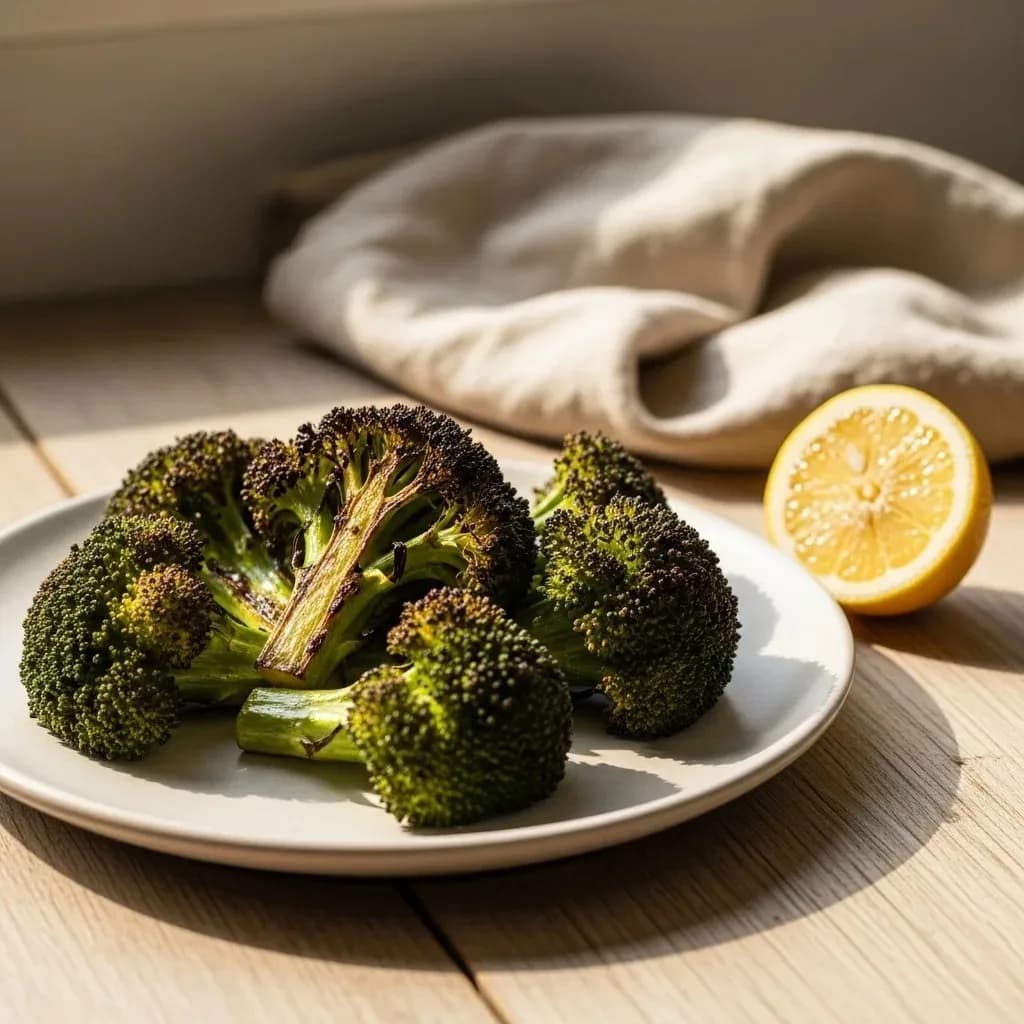
- Roast and check. Roast, turning the pieces once during cooking. Start checking at 15 minutes. Continue until the edges brown and the stem is tender, often 18 to 22 minutes for medium florets. Take out smaller pieces sooner if necessary.
- Finish and serve. Move the tray onto a heat-safe surface using oven mitts. Add lemon juice, Parmesan or another topping after roasting. Serve promptly.
Is 400°F or 425°F better for broccoli?
Both temperatures can work. The 425°F setting is a useful starting point for browning, while 400°F (205°C) is convenient when another dish already needs that oven temperature. At the lower setting, expect to allow longer and check the same tenderness and browning cues.
Ovens, tray materials and floret sizes vary. A dark tray may brown the underside faster, and very small pieces may be done before the suggested range. Check the first batch early. If the tips darken while the stems remain firm, lower the heat slightly or cut the stems thinner next time.
Why is roasted broccoli soggy?
Look first at water and spacing. Pat the washed broccoli dry, coat lightly with oil and leave gaps between the pieces. A crowded tray holds moisture near the florets. Split a large batch across two trays rather than piling it higher. If using two racks, swap their positions during cooking as needed.
Do not cover the tray while you want browning. Avoid adding a wet sauce before roasting; use it as a finish instead. If the broccoli is tender but pale, give it a little more time while watching the edges.
Can you roast the stem as well as the florets?
Yes. Cut away the dry end, peel the fibrous outside and slice the tender middle. The stem is denser than the tips, so thin pieces work better alongside florets. Keep the sizes reasonably consistent so one part does not stay hard while the other burns.
Large florets can be split lengthwise to make a flat surface for the tray. Tiny loose fragments brown quickly; keep them together where you can lift them out early.
Should you blanch broccoli before roasting?
This fresh-broccoli method does not need blanching. Starting with dry, raw pieces avoids an extra pot and makes the surface easier to brown. If you already have blanched broccoli, drain and dry it well, then expect it to need less cooking because its interior has already softened.
For frozen broccoli, follow the package roasting directions when provided. Expect a softer result because freezing changes the texture and the tray must shed more moisture. Spread the pieces well and check tenderness rather than applying an exact extra number of minutes. Frozen and fresh broccoli are useful options, but they do not behave identically.
How do you season roasted broccoli?
Salt, pepper and olive oil are enough to start. Add lemon juice after cooking so the tray stays dry during roasting. Parmesan, chili flakes or a little toasted sesame oil can change the flavor without changing the basic method. Taste before adding more salt, especially with cheese or soy sauce.
For a full meal, serve with rice and tofu, pasta and beans, or your preferred protein. Keep moist sauces on the side until serving. If you want broccoli for a salad, let it cool in a single layer rather than steaming inside a covered bowl.
Does roasting remove all the nutrients?
No. Cooking changes food composition, and its effects depend on temperature, time and method. It is misleading to assign one vitamin-loss percentage to every tray of roasted broccoli. Chopping ahead does not establish a predictable nutrient content for a home-roasted portion.
Use the calories page to distinguish a raw serving from a cooked serving, and count added oil separately. A cup of roasted broccoli is not automatically the same weight as a cup of raw florets. The practical goal here is a side dish you enjoy, rather than a claim that one preparation prevents or treats disease.
How should you store and reheat it?
Refrigerate within 2 hours, or within 1 hour above 90°F (32°C), in a shallow covered container. Keep the refrigerator at 40°F (4°C) or below and use leftovers within 3 to 4 days, following USDA guidance.
Reheat to 165°F (74°C). An oven or skillet may restore some surface browning; a microwave is quicker but makes softer broccoli. Check temperature as well as appearance. Reheat only what you plan to eat, and use the storage guide for fresh broccoli that has not yet been cooked.
Frequently asked questions
Can you roast broccoli without oil?
Yes, but expect a drier surface and a different texture. Watch carefully for scorching. Use a tray liner rated for the oven temperature if sticking is a concern.
Should you use convection?
Follow your oven manual. Convection moves hot air and can brown food sooner, so check earlier and adjust the setting if the manufacturer recommends it.
Can you roast broccoli with garlic?
Yes. Small garlic pieces can burn before the broccoli is ready. Add them later in cooking or use larger pieces, and watch the tray closely.
What if the tips are black but the stem is hard?
Cut smaller, more even pieces next time and avoid an excessively hot rack position. Brown edges are the aim; blackened tips are not a useful doneness target.