How to Steam Broccoli
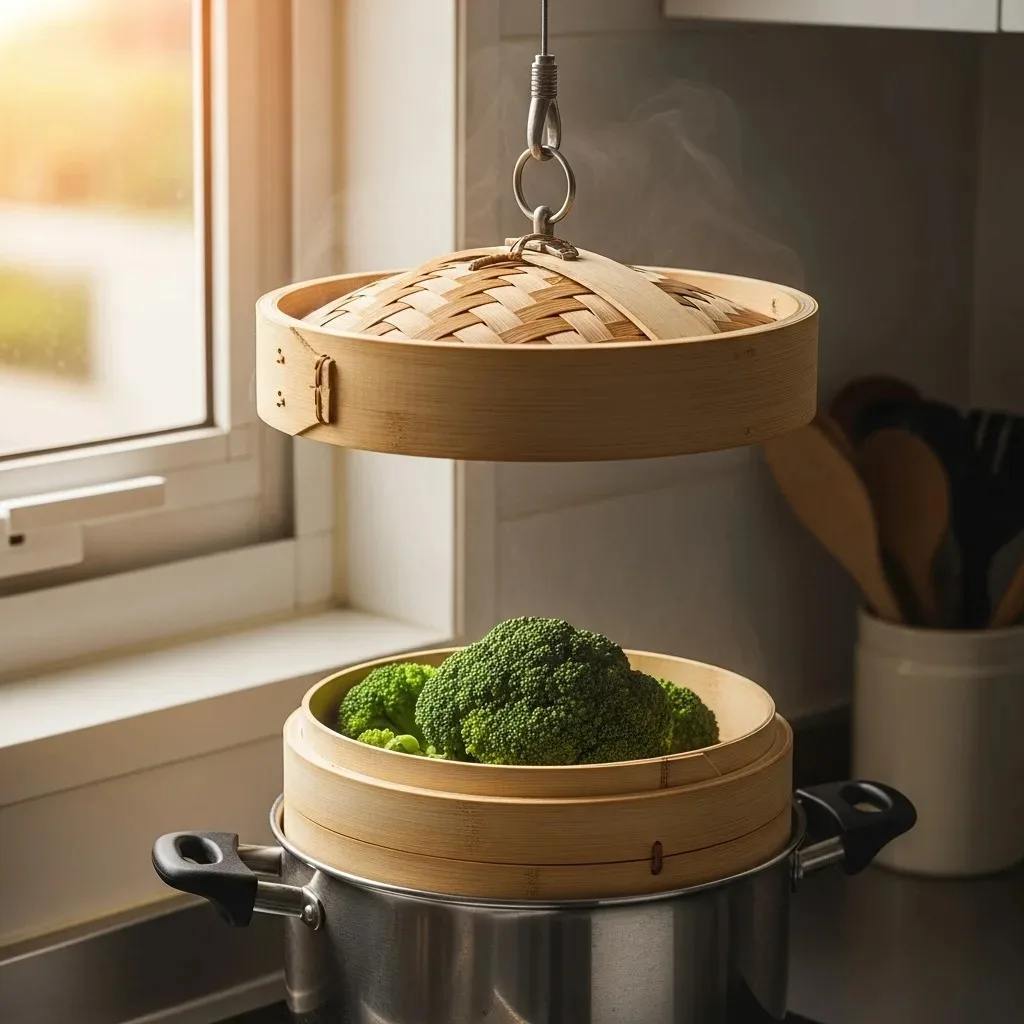
Adam refused broccoli for a full month in 2022. Every night it came back untouched. It took me embarrassingly long to realize the problem was me. I had been boiling it. Gray, waterlogged, sad little florets. One Tuesday I steamed it instead, and he watched the color go from dull green to that vivid, almost glowing bright. He ate it. That color change is the whole lesson. The timer is secondary.
Key Takeaways
- Steam time: 4 to 5 minutes for crisp-tender; 6 to 7 minutes for softer (kids love this range)
- Water level: 1 inch in the pot, enough to produce steady steam without touching the florets
- Done signal: Vivid bright green with slight fork resistance; olive-dark green means overcooked
- Nutrient advantage: Steaming retains far more vitamin C and glucosinolates than boiling (PMC2722699)
- Sulforaphane trick: Chop and wait 40 minutes before applying heat to maximize sulforaphane production
How Long to Steam Broccoli
Four to five minutes for crisp-tender. Six to seven for softer florets. The range matters because floret size varies. I go by color first, then test with a fork. Alfi likes his softer, so I usually pull a few out at five minutes for his plate and let the rest go another minute.
| Texture | Steam Time | Fork Test |
|---|---|---|
| Crisp-tender | 4 to 5 minutes | Slight resistance |
| Tender | 5 to 6 minutes | Yields easily, holds shape |
| Soft (toddler-friendly) | 6 to 7 minutes | Very soft, slight give only |
Do not go past 7 minutes. Past that the florets release sulfur compounds and that smell is exactly why kids wrinkle their noses.
Step-by-Step Instructions
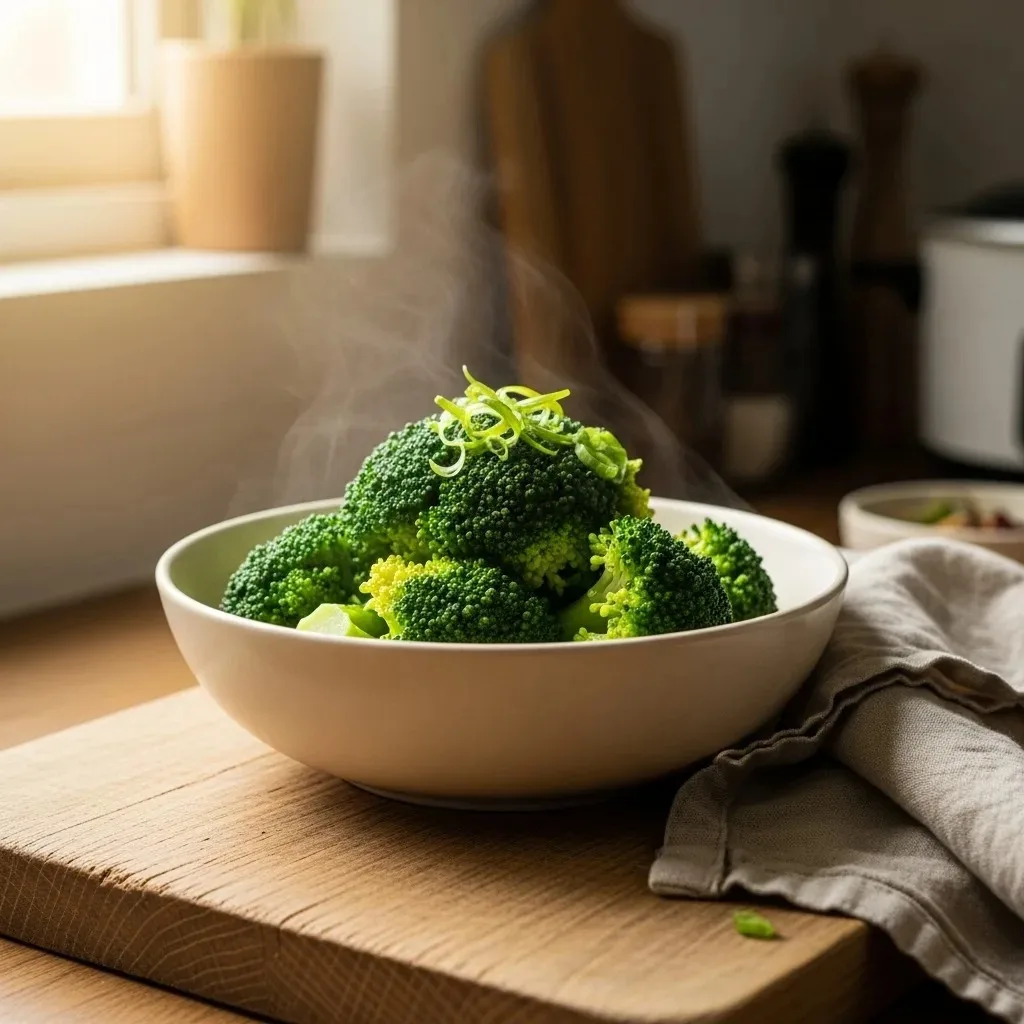
Before you start: Brush the crown or rinse well and shake dry. Fine grit collects in the floret clusters and you do not want to steam that into dinner.
- 1Cut the broccoli into even 1-inch florets. Uniform size is the single most important thing for even cooking. Cut the stems to roughly the same thickness as the floret heads. Pieces that are too big will be raw in the middle when the outside is done.
- 2Optional but worth it: wait 40 minutes after cutting. Heat above 70°C destroys myrosinase, the enzyme that converts glucoraphanin into sulforaphane. If you let the cut florets rest at room temperature for 40 minutes first, the reaction completes before heat can stop it. Research in the Journal of Agricultural and Food Chemistry confirms this increases sulforaphane yield. I prep in the morning when I know broccoli is on the dinner menu.
- 3Add 1 inch of water to a medium saucepan and bring it to a full boil over high heat.
- 4Place florets in a steamer basket with stems facing down and lower into the pot. Stems take longer than the delicate tops. Keeping them closer to the steam source helps them cook at the same rate.
- 5Cover and reduce heat to medium. Steam for 4 to 5 minutes.
- 6At the 2 to 3 minute mark, remove the lid and toss the florets once. The pieces at the bottom of the basket get more direct steam exposure than the ones on top. One quick toss levels this out. No written guide I have read mentions this, but it genuinely makes a difference.
- 7Watch for the color change. Dull, chalky green going vivid and bright means the florets are done or very close. If they start going dark olive green, they are overcooked. Pull them out immediately.
- 8Remove from heat and season right away. A drizzle of olive oil, a squeeze of lemon, salt, and black pepper. The heat helps the seasoning absorb.
Why Steaming Keeps More Nutrients Than Boiling
When you boil broccoli, water-soluble vitamins and glucosinolates leach into the cooking water, which then goes down the drain. A 2009 study in the Journal of the Science of Food and Agriculture (PMC2722699) compared steaming, boiling, microwaving, and stir-frying and found steaming retained the most chlorophyll, soluble proteins, vitamin C, and glucosinolates.
Broccoli contains 89.2 mg of vitamin C per 100g raw (USDA FDC ID 170379), more than an orange. Boiling can cut that roughly in half. Steaming keeps most of it. Vitamin K comes in at 102 mcg per 100g, about 85% of the daily value, and steaming preserves that too. The method matters. A steamer basket costs almost nothing and the nutritional difference is real.
How to Steam Broccoli Without a Steamer Basket
You do not need special equipment. Two workarounds that actually work:
Colander method: If you have a colander with a rim that rests on your pot edges, it works exactly like a steamer basket. Add 1 inch of water to the pot, bring to a boil, put the broccoli in the colander, cover with a lid or foil, and steam 4 to 5 minutes.
Skillet method: Add half an inch of water to a wide skillet, bring to a simmer, add florets, cover with a tight lid, and steam 3 to 4 minutes. The wider surface means more steam contact, so check early.
How to Steam Broccoli in the Microwave
Place florets in a microwave-safe bowl with 2 to 3 tablespoons of water. Cover tightly with a microwave-safe plate or cling wrap, leaving a small vent. Microwave on HIGH for 2.5 to 3.5 minutes. Let it sit covered for 30 seconds before opening.
Research in Food Science and Nutrition (2020) found moderate microwave heating around 60°C can actually increase sulforaphane yield compared to high-heat stovetop cooking, because myrosinase survives the lower temperature. Not the nutritional downgrade most people assume.
Frequently Asked Questions
Is it better to boil or steam broccoli?
Steaming wins on nutrients. Boiling leaches water-soluble vitamins and glucosinolates into the cooking water. Research shows steaming retains more vitamin C and sulforaphane precursors than boiling (PMC2722699). After one minute of boiling, myrosinase is nearly deactivated and sulforaphane production stops.
How do you know when steamed broccoli is done?
Watch the color. Raw broccoli is dull and chalky green. Properly steamed goes vivid and bright. Olive-dark means overcooked. For texture, press a fork into a thick stem: crisp-tender has slight resistance; soft yields easily without falling apart.
How do you steam broccoli without a steamer basket?
Use a colander with a rim that rests over your pot. It works exactly like a steamer basket. Or use a wide skillet with half an inch of water and a tight lid. Both work without any special tools.
Why does steamed broccoli turn gray or mushy?
Two reasons. Overcooking: broccoli turns gray in under a minute past the ideal point, so pull it when it looks vivid. Residual heat: leaving it in a covered pot after you turn off the heat keeps cooking it. Remove from the basket immediately.
References
- Vallejo, F., Tomas-Barberan, F., & Garcia-Viguera, C. (2003). Phenolic compound contents in edible parts of broccoli inflorescences after domestic cooking. Journal of the Science of Food and Agriculture, 83(14), 1511-1516. PMC2722699.
- U.S. Department of Agriculture, Agricultural Research Service. (2024). FoodData Central: Broccoli, raw. FDC ID 170379. https://fdc.nal.usda.gov
- Dosz, E. B., & Jeffery, E. H. (2013). Modifying the processing and handling of frozen broccoli for increased glucoraphanin hydrolysis product yield. Journal of Agricultural and Food Chemistry.
- Martinez-Hernandez, G. B., et al. (2020). Mild microwave heating of broccoli can increase sulforaphane bioavailability. Food Science and Nutrition.
No disease treatment or cure claims are made. All nutritional data sourced from USDA FDC ID 170379. Research findings are presented as research suggests, not medical advice.