Can Chickens Eat Broccoli?
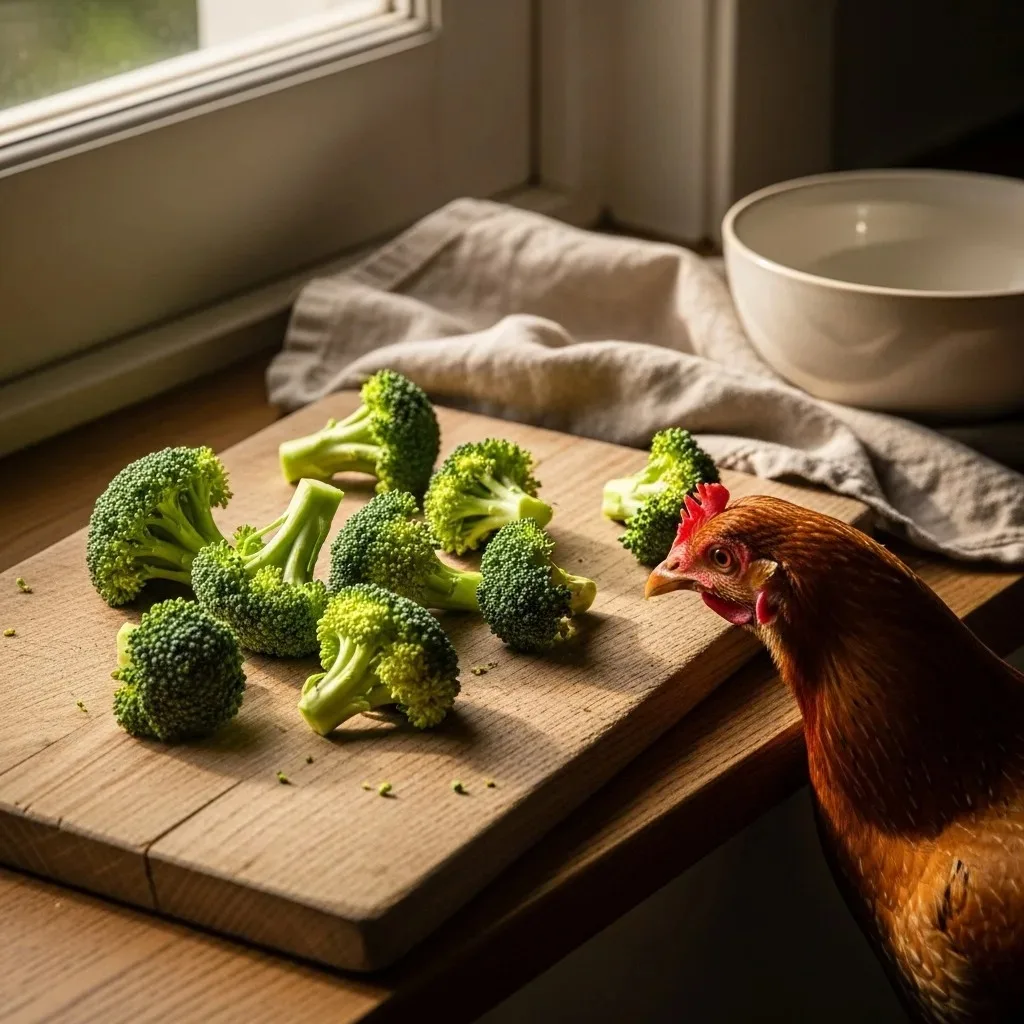
Boss charged the broccoli stalk like it had personally offended her. I had been about to compost it. That moment happened in my small raised-bed garden here in Singapore after I'd harvested the crowns for Adam's school lunches. I tossed the leftover stalks and outer leaves over the fence into the run on a whim. All three hens went completely still for maybe five seconds, heads tilted, and then Boss, my oldest Barred Rock, launched herself at the woodiest part of the stalk. The other two scrambled in immediately. That night, while Adam was finishing his homework, I sat at the kitchen table googling “can chickens eat broccoli stems.” That search is why this page exists.
Key Takeaways
- All parts safe: florets, stalks, leaves, roots
- Raw or plain cooked (no salt, butter, garlic, or oil)
- 10% treat rule: broccoli plus all other treats combined should not exceed 10% of daily diet
- Goitrogen risk is real but dose-dependent: a few times a week is fine, every day in large amounts is not
- Chop raw stalks into peck-sized pieces; leaves and florets can go in whole
- Offer grit alongside any fresh food if your flock is on a confined run
What parts of the broccoli plant can chickens eat?
All of it. And I mean genuinely all of it.
Most guides lead with the florets, but in my run, Boss completely ignored the florets and went straight for the stalk. Alfi said the chickens had better taste than us. He is probably right.
Can chickens eat broccoli every day?
This is where I have to be more careful with the answer.
The standard guideline is the 10% treat rule: treats of any kind should make up no more than 10% of a chicken's total diet. The other 90% should be their commercial layer feed, which provides the protein, calcium, and amino acids they need for good egg production.
The reason this matters more with broccoli than with cucumber or carrot is goitrogens. Broccoli, along with kale, cabbage, and soybeans, contains compounds that in large amounts over time can interfere with thyroid function in chickens. The condition is called avian goiter, an abnormal enlargement of the thyroid gland, and symptoms include weight loss, lethargy, and general decline.
The goitrogen risk is dose-dependent. Research suggests the 10% treat rule is protective in practice. A handful of chopped broccoli a few times a week is not going to cause thyroid problems. It becomes a concern if broccoli is the primary food source, or if the flock is also on soy-heavy feed, since soybeans also contain goitrogens.
My approach is simple. I give broccoli scraps when I have them, maybe twice a week some weeks, zero other weeks. I do not deliberately feed it every single day.
Can chickens eat broccoli raw?
Yes. Raw is my default because it retains more nutrition. Broccoli contains 89.2 mg of vitamin C per 100 grams and is 89.2% water (USDA FDC 170379). Heat breaks some of that down. Raw broccoli also gives them more to work at in the run, which keeps the flock active and occupied.
The only prep note: chop dense stalks into peck-sized pieces. A food processor works well for larger flocks. I usually just use a knife.
What vegetables are not good for chickens?
The main ones to avoid: avocado skin and pit, which contain persin and are toxic to birds; onions and garlic in large amounts; raw or dried beans; and anything rotten or moldy. Raw potato peel contains solanine and is generally considered risky. Tomato leaves and green tomatoes should also be avoided.
Broccoli does not appear on any of those lists. It is one of the genuinely safe vegetables for backyard flocks.
How do I prepare broccoli for chickens?
Not very elaborately, honestly.
Rinse it first, especially supermarket broccoli. Check for mold or rotten spots and cut those off. If you would not eat it yourself, your chickens probably should not eat it either.
Chop stalks into pieces about the size of a large grape. Leaves can go in whole. Florets can go in whole if the flock is large enough to peck it apart as a group. Offer grit alongside any non-feed food, since grit is what chickens use to grind food in the gizzard. If your birds free range on soil with gravel access, they likely have enough. A confined flock on concrete or wood chips needs a separate grit container.
Does broccoli affect egg production?
Broccoli contains 47 mg of calcium per 100 grams (USDA FDC 170379), and calcium goes directly into eggshell formation. It also contains 316 mg of potassium per 100 grams (USDA FDC 170379), which supports overall hen condition.
That said, broccoli's calcium content is not high enough to substitute for oyster shell or the calcium in layer feed. Think of it as a minor contribution within a varied diet, not a targeted egg-production supplement.
Frequently Asked Questions
Can chickens eat broccoli stalks?
Yes. Stalks are safe and often the part chickens prefer. Chop raw stalks into peck-sized pieces for easy eating. Cooked stalks are soft enough to give in larger pieces.
Can chickens eat broccoli seeds?
Yes. Broccoli seeds are safe. They are small enough that no chopping is needed. Sprouted seeds increase nutritional density if you want to go that extra step.
Can chickens eat broccoli and cauliflower?
Yes to both. Cauliflower is in the same brassica family, so the same guidance applies: all parts are safe, moderation matters, no seasoning if cooked. Both contain goitrogens, so avoid large amounts of both on the same day.
Can chickens eat broccoli leaves?
Yes, and this is honestly the best use of broccoli for a flock. The tough outer leaves that most of us would compost are eagerly eaten by hens. It is a genuinely zero-waste move for anyone growing broccoli in the garden.
Sources
- USDA FoodData Central. (2019). Broccoli, raw. FDC ID 170379. fdc.nal.usda.gov
- Boreal Bloom Homestead. “Can Chickens Eat Broccoli?” Keeper experience documentation of goitrogen and avian goiter risk. Not peer-reviewed veterinary literature.
- This page does not constitute veterinary advice. If your flock shows signs of illness, consult a licensed poultry veterinarian.