
How to Freeze Broccoli Step by Step
You need a large pot, a baking sheet, parchment paper, and a freezer bag. No special equipment.
Adam came home from a school farm day carrying four heads of broccoli in his school bag, like they were trophies. He was so pleased with himself. I had nothing planned for dinner, the fridge was already full, and bath time was in forty-five minutes. I cut the florets up, blanched them for two minutes, shocked them in an ice bath, spun them dry, laid them on a tray, and stuck the whole thing in the freezer. Three weeks later I pulled them out for a pasta dish. Better than anything I had bought at FairPrice. That evening started a habit: I now buy two heads whenever one would do, so there is always something frozen at the back.
- 1Cut the florets. Separate the head into pieces no larger than 1.5 inches across. Split thick stalks lengthwise. Uniform size matters because they freeze and thaw at the same rate.
- 2Brine soak (optional but useful). Dissolve 4 teaspoons of salt in 1 gallon of cold water. Soak florets for 30 minutes. This comes straight from the USDA extension guide and draws out insects hiding in the florets. I was surprised when I first read it. Rinse well before blanching.
- 3Blanch. Bring a large pot to a full boil. Drop in the florets and blanch for exactly 3 minutes. That is the water blanching standard from the National Center for Home Food Preservation. Steam blanching takes 5 minutes. Do not guess: under-blanching is worse than skipping it entirely.
- 4Ice bath. Transfer immediately to ice water for 2 to 3 minutes. This stops cooking and holds the colour.
- 5Dry completely. Use a salad spinner first, then spread on a kitchen towel and pat dry. Broccoli is 89.2% water by weight (USDA FDC 170379), so moisture left on the surface becomes ice crystals in the freezer. Those crystals tear cell walls, which is why frozen broccoli goes mushy.
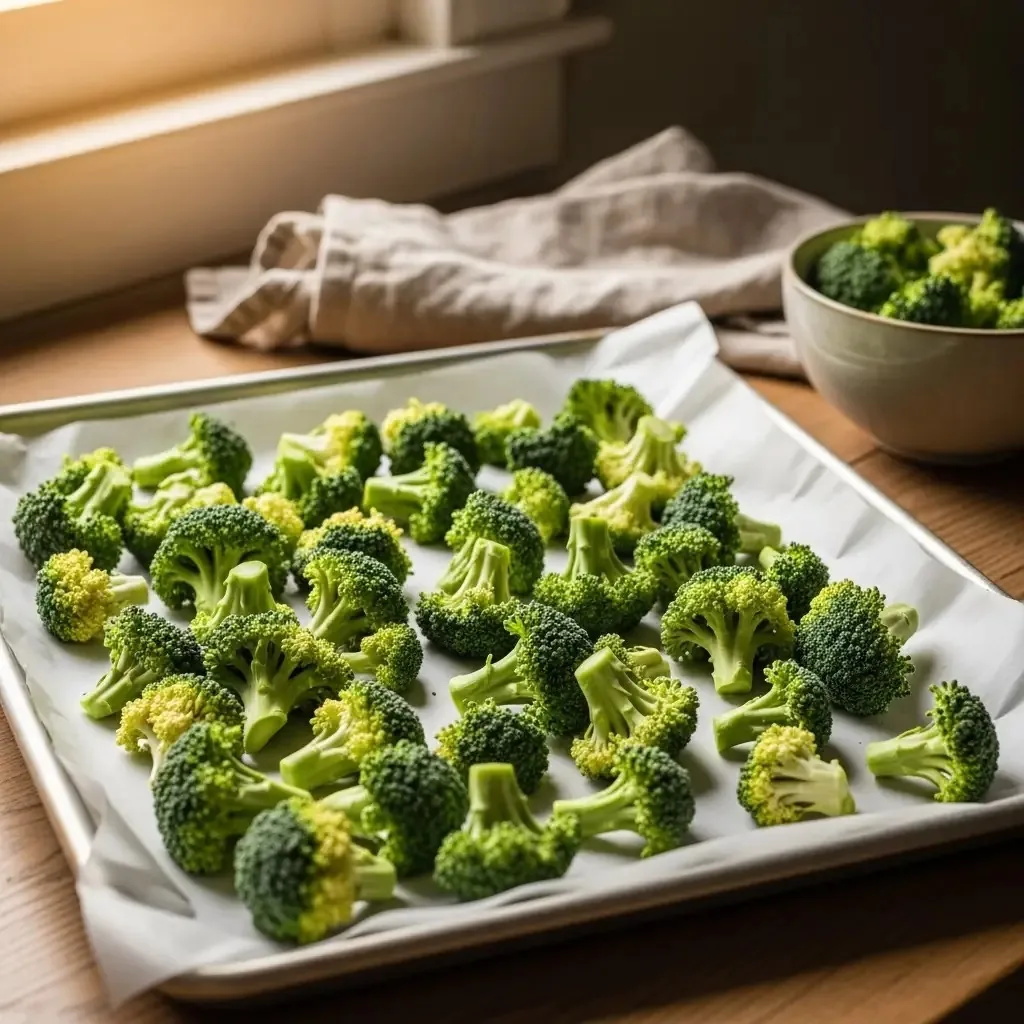
- 6Flash freeze. Spread dried florets in a single layer on a parchment-lined baking sheet. No overlapping. Freeze 1 to 2 hours until solid.
- 7Bag and seal. Transfer to airtight freezer bags. No vacuum sealer? Use the straw trick: seal the bag almost closed, insert a straw, suck the air out, then seal the last inch as you pull the straw out. Label with the date. Leave no headspace.
Do You Have to Blanch Broccoli Before Freezing?
No, but the shelf life changes a lot.
Blanching stops the enzymes (peroxidase and catalase) that keep degrading texture and flavour even at freezer temperatures. Blanched broccoli holds quality for 6 to 12 months. Unblanched, you get about 1 month before yellowing and off-flavours develop.
The Oregon Cottage ran a head-to-head test, blanched versus unblanched, and at the 2-week mark their tasters actually preferred the firmer texture of the unblanched batch. At 3 and 6 months, both versions were still viable. For soups and stir-fries where texture matters less, unblanching is a reasonable choice.
There is a nutrition argument here that most articles skip. Blanching denatures myrosinase, the enzyme that converts glucoraphanin into sulforaphane. Raw-frozen broccoli preserves that enzyme. Research from MD Anderson notes that sulforaphane production depends on myrosinase activity. If you are freezing broccoli specifically for its nutritional value, raw-frozen has a case. That does not mean it treats or prevents anything. It just means the enzyme is still there when you cook it.
I do both. I blanch a large batch for long storage and keep a small unblanched bag for the next few weeks. Alfi prefers the texture of the unblanched version in pasta. Adam does not notice the difference as long as there is enough cheese.
| Blanched | Unblanched | |
|---|---|---|
| Shelf life | 6 to 12 months | Up to 1 month |
| Texture (long-term) | Slightly softer | Firmer (short-term) |
| Colour retention | Better (long-term) | Yellows within weeks |
| Myrosinase (sulforaphane) | Denatured | Preserved |
| Vitamin C | Some lost to water | More retained |
| Best for | Long storage, meal prep | Quick use, soups, stir-fry |
How Can I Freeze Broccoli Without It Getting Mushy?
Two things cause mushiness: moisture before freezing and slow freezing.
Water left on the florets forms ice crystals that collapse cell walls on thaw. Dry them with a salad spinner and a kitchen towel after the ice bath. Do not rush this step.
Slow freezing makes larger crystals. Single-layer flash freezing on a baking sheet keeps pieces freezing fast and separately. Once solid, they will not clump into a block and you can take out exactly how much you need.
When cooking, go from frozen straight into the pan or pot. Thawing first releases water and the result is limp and watery. Frozen florets into a stir-fry or steamer take just 1 to 2 minutes longer than fresh.
How Long Does Frozen Broccoli Last?
Blanched and properly sealed: 6 to 12 months (NCHFP guidance). After 12 months it is still safe but flavour and texture degrade noticeably.
Unblanched: 1 month for good quality.
Signs it has gone bad: dark brown or black patches (not just light yellowing at the tips), a strong sulphur smell on opening, or heavy ice crystal buildup across the whole bag. Light freezer burn on edges is normal. Cut it off and use the rest. Significant freezer burn across the whole piece means not enough air was removed at sealing.
A medium broccoli head (about 1 lb) fills 1 to 2 quart-size freezer bags. Label each bag with the date frozen and the method (blanched or not). Makes it easy to use oldest-first.
Does Freezing Destroy Broccoli's Nutrients?
Less than most people assume. Raw broccoli contains 89.2 mg of vitamin C per 100g, which is 99% of the daily value (USDA FDC 170379). Blanching does degrade some vitamin C into the cooking water, so raw-frozen broccoli preserves more. But the difference is smaller than leaving fresh broccoli in the fridge for five days.
Vitamin K and fibre are largely stable in both methods (USDA FDC 170379). The more interesting question is sulforaphane potential, covered in the blanching section above.


