Broccoli Fiber Content: What I Learned When I Stopped Throwing Away the Stem

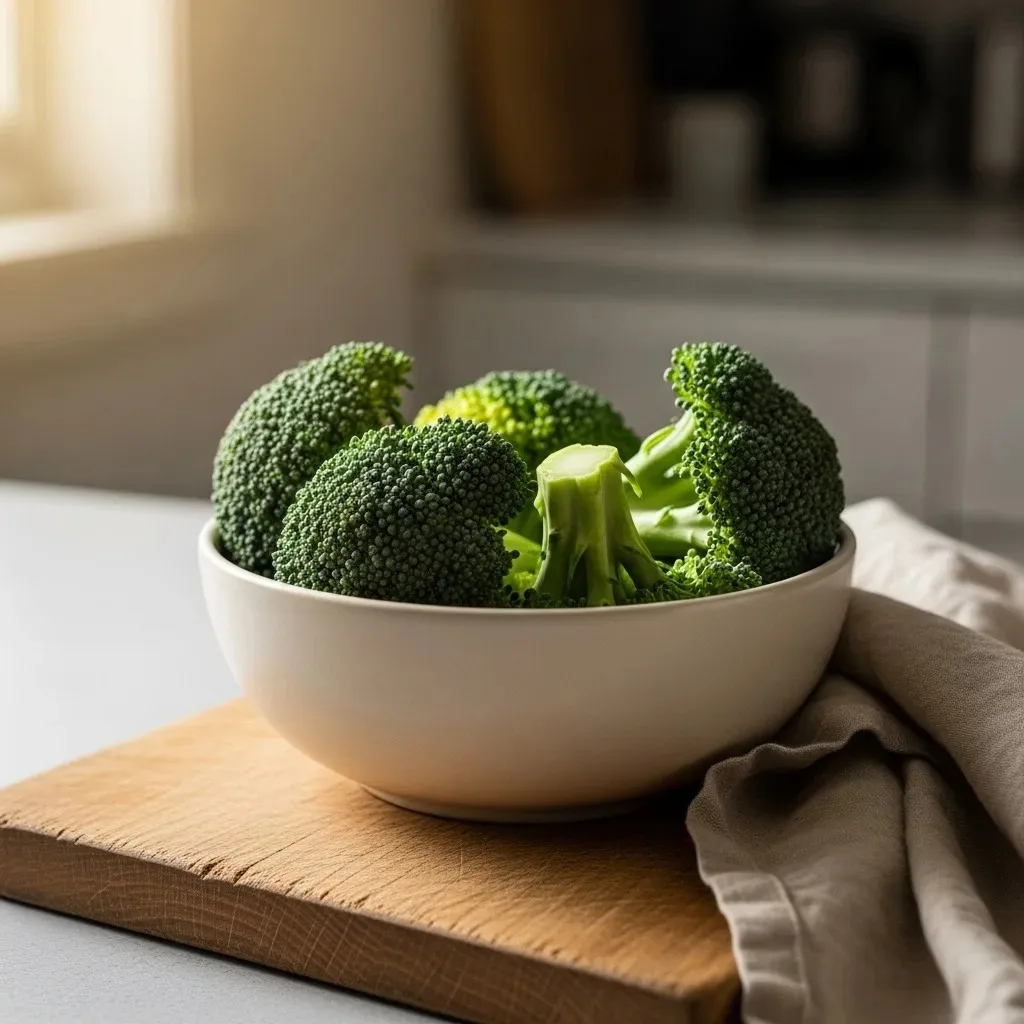
Adam used to leave the broccoli stems on his plate like they were furniture. For almost a year, I cut the florets off before dinner even hit the table and binned the stalks without thinking. Then early in 2023, I read that the stem I had been tossing contains more fiber per gram than the florets I was carefully saving. About 1.8g per 100g in the stem versus roughly 1.1g in the tops. I had been throwing away the better bit. I stopped immediately. I now peel and slice the stems every single time.
Raw broccoli has 2.6g of fiber per 100g, or 2.4g per cup chopped. Cook it and the per-cup number climbs to 5g. One cooked cup covers about 20% of the daily target for women (25g/day) and 13% for men (38g/day). (USDA FDC 170379)
What type of fiber does broccoli have: soluble or insoluble?
Both. Raw broccoli is about 87% insoluble fiber and 13% soluble per 100g. That works out to 3.06g insoluble and 0.44g soluble per 100g. (USDA FDC 170379)
Insoluble fiber passes through mostly intact, adds bulk to stool, and keeps things moving. That is the regularity side of the equation.
Soluble fiber dissolves, forms a slow gel, and feeds the bacteria in your large intestine. That fermentation produces short-chain fatty acids (SCFAs), including butyrate, which fuels your colon wall cells. Think of it as prebiotic food, not just roughage.
Cooking changes the split. Steaming or microwaving shifts the ratio to around 60% insoluble and 40% soluble. The same vegetable does different gut work depending on how you cook it.
Does cooking broccoli change its fiber content?
Cooking does not destroy fiber. What changes is the ratio and the per-serving amount.
Steaming and microwaving are the best methods. They restructure cell walls in a way that increases available soluble fiber. The cooked cup also weighs more, which is why 5g per cooked cup sounds so much higher than 2.4g raw. You are eating a larger mass of broccoli in that same cup measure.
Boiling is the one to watch. Soluble fiber leaches into the cooking water. The fix is simple: save that liquid. It has real fiber value and works well in soups and sauces. I pour it into the soup base almost every time.
Which has more fiber: broccoli florets or the stem?
The stem, by a meaningful margin.
Broccoli stems contain approximately 1.8g of fiber per 100g. The florets come in at around 1.1g per 100g. (Nutritional comparison data via medindia.net citing USDA data)
Most home cooks eat the tops and bin the stalks. I did it for a year. The outer skin is tough, but what is underneath is crisp and mild. Peel it, slice it thin, and it disappears into stir-fries or fried rice. Alfi eats it without realising what he is eating. That is honestly the goal some nights.
Is broccoli a good source of fiber compared to other vegetables?
Solid, not the highest. Here is how it stacks up, per 100g raw:
| Vegetable | Fiber per 100g |
|---|---|
| Kale | 4.1g |
| Brussels sprouts (cooked, per cup) | 4.5g |
| Broccoli | 2.6g |
| Cauliflower | 2.0g |
Source: USDA FDC 170379 and USDA SR Legacy
Where broccoli earns its place is the cooked cup amount. A full cup steamed gets you to 5g. If you eat the stems too, you are genuinely moving the needle on a 25 to 30g daily target.
Why does broccoli cause gas, and should you eat less?
The gas comes from raffinose, a complex sugar that humans cannot digest. Gut bacteria ferment it in the large intestine, which produces gas. That fermentation is actually your gut working. The bacteria doing the fermenting are mostly the ones you want more of.
Research has found that regular broccoli eating is linked to a 9% reduction in Firmicutes and a 10% increase in Bacteroides in gut bacterial populations. (Healthline, citing clinical research) A 2023 review in the journal Antibiotics (PMC10376324) confirmed that high vegetable fiber intake promotes growth of beneficial microbes and supports bowel regularity.
Your tolerance improves over two to three weeks of consistent eating. The discomfort is not a sign to eat less. It is a sign your gut is adjusting.
What does broccoli fiber do in your gut?
Broccoli fiber feeds Lachnospiraceae bacteria specifically. When they break it down, they produce butyrate and acetate. Butyrate is the primary energy source for the cells lining your colon.
Separate from the fiber pathway, broccoli contains aryl hydrocarbon receptor (AHR) ligands including indole-3-carbinol. A 2023 mouse study from Penn State, published in Laboratory Investigation, found that mice fed a diet equivalent to roughly 3.5 cups of broccoli per day showed better gut lining health, with more mucus-producing goblet cells. That is a mouse study and the human equivalent intake is high, but the mechanism points to something real.
Research also suggests soluble fiber from broccoli may support blood sugar control by slowing glucose absorption after meals.
Frequently Asked Questions
How much fiber is in broccoli per cup?
Raw broccoli contains approximately 2.4g of fiber per cup chopped (91g). Cooked broccoli reaches 5g per cup. (USDA FDC 170379)
Is raw or cooked broccoli higher in fiber?
Cooked broccoli is higher per cup because the serving weight increases. The fiber is not destroyed. Steaming also shifts more of it to the soluble, prebiotic type. Boiling leaches some soluble fiber into the cooking water, so save that liquid.
Does the broccoli stem have more fiber than the florets?
Yes. Stems contain approximately 1.8g of fiber per 100g versus about 1.1g in the florets. Peel the outer skin and slice the stems to use them.
Why does broccoli cause gas?
Broccoli contains raffinose, a complex sugar gut bacteria ferment in the large intestine. This fermentation is healthy bacterial activity. Eating broccoli consistently over two to three weeks reduces symptoms as the microbiome adapts.
What type of fiber does broccoli have?
Both soluble and insoluble. Raw broccoli is roughly 87% insoluble (bulk, regularity) and 13% soluble (prebiotic, gut bacteria feed). Cooking shifts that toward more soluble fiber. (USDA FDC 170379)
References
- USDA FoodData Central. Broccoli, raw. FDC ID 170379. fdc.nal.usda.gov
- Mehta, R. S., et al. (2023). Broccoli: A multi-faceted vegetable for health. Antibiotics, 12(7), 1101. PMC10376324. pmc.ncbi.nlm.nih.gov
- Penn State University. (2023, April). Broccoli compound may benefit gut health. Laboratory Investigation. sciencedaily.com
- Mayo Clinic. (2023). Chart of high-fiber foods. mayoclinic.org