
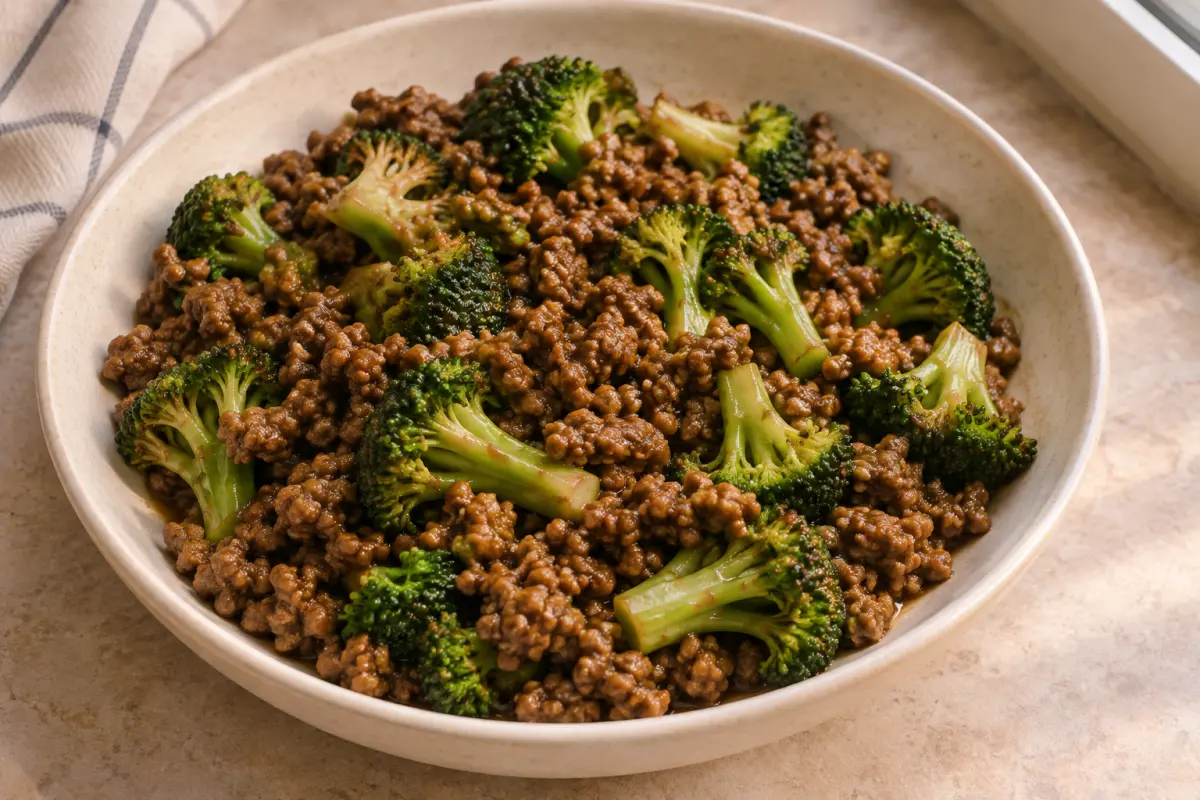
A packet of minced beef and a head of broccoli can share a skillet without cooking on the same schedule. Start the vegetables separately, brown the beef, then bring them together in a measured sauce. That keeps the broccoli from spending the whole meal beneath a layer of meat.
Mix the sauce before cooking and keep a clean bowl nearby for the broccoli. You can then stay with the pan instead of measuring ingredients while the beef cooks.
What ingredients and equipment do you need?
Use a wide, lidded skillet, ideally about 30 cm across, plus a bowl for the broccoli, a small jug, spoon, measuring equipment and an instant-read food thermometer. Cook any rice separately.
For approximately four portions, prepare:
- 450 g lean ground beef, 90% lean
- 400 g broccoli florets and peeled stem slices
- 10 ml neutral cooking oil, divided
- 60 ml water for the broccoli
- 2 garlic cloves, finely minced
- 10 g fresh ginger, finely grated
For the sauce, whisk together:
- 30 ml reduced-sodium soy sauce
- 120 ml water
- 10 ml rice vinegar
- 10 g brown sugar
- 8 g cornstarch
Rice can be prepared separately and served alongside. There is no need for a garnish; the ginger and garlic are mixed through the sauce. Soy sauce can contain wheat as well as soy, so check labels rather than assuming this recipe is gluten-free.
Set aside about 15 minutes for preparation and 20 minutes for cooking. Pan size and broccoli cuts affect timing. Safe doneness takes priority over the clock.
How do you prepare the broccoli and sauce?
Cut florets approximately 3 cm across and peel any tough stem skin before slicing the centres about 5 mm thick. Similar-sized pieces are easier to assess than a mixture of tiny crumbs and large branches. Our floret cutting guide shows how to separate the head.
Wash fresh broccoli under running water and keep its board separate from raw-beef preparation. The FDA's produce handling guidance supports this separation. Dry the vegetables so the steaming water is a measured amount rather than an unknown addition.
Stir the sauce ingredients in the jug before heating the pan. Cornstarch settles, so it needs another stir immediately before pouring. Keep the garlic and ginger separate from the sauce; the method briefly cooks them with the beef first.
How do you cook ground beef and broccoli?
- Heat half the oil in the skillet over medium heat. Add the broccoli and 60 ml water. Cover for about three minutes, then check a stem with a fork. It should still resist slightly because it will return to the sauce.
- Move the broccoli to its bowl with a clean utensil. Pour off remaining water. Let surface moisture evaporate before adding the remaining oil and the raw beef.
- Break the beef into small crumbles and cook over medium-high heat, stirring and turning it. Allow roughly six to eight minutes, checking the temperature as it cooks. Reduce heat if the pan scorches. Carefully spoon off excess rendered fat, leaving a light coating in the skillet.
- Check the beef with the thermometer according to its instructions, sampling several substantial portions without touching the hot pan. FoodSafety.gov specifies 160°F for ground meat. Brown colour alone is not the safety check.
- Add the garlic and ginger. Stir for approximately 30 seconds, watching for scorching. Restir the sauce, pour it in and bring it to a visible bubble while stirring.
- Return the broccoli and its collected juices. Toss gently for about two minutes, until the sauce coats the crumbles and the broccoli reaches your preferred tenderness. Check the beef again if needed and serve promptly.
A broad skillet loses water faster than a narrow one, and thick stems may need longer. Use the beef temperature for safety and a fork to check the vegetable texture.
What if the sauce is too thin or thick?
First check whether the sauce reached a bubble. Stirring cornstarch into a lukewarm pan is different from cooking it through. Also check whether water from washing, frozen vegetables or covered cooking entered the skillet.
| Problem | Check | Response |
|---|---|---|
| Thin sauce | Sauce never bubbled, or extra vegetable water | Stir over heat briefly and reassess before adding anything. |
| Thick, sticky coating | Too much evaporation | Add water one tablespoon at a time and stir. |
| Lumps | Cornstarch settled in the jug | Whisk the next batch again immediately before pouring. |
| Greasy sauce | Beef released more fat than expected | Drain excess carefully before the aromatics and sauce. |
Do not add dry cornstarch directly to a finished skillet. If the sauce needs more thickener, mix a small amount separately with cold water before stirring it into the bubbling sauce. Avoid solving every problem by reducing the sauce, which can concentrate its saltiness.
Can you use frozen broccoli or another meat?
Frozen broccoli releases a different amount of water from fresh broccoli. Follow its package cooking instructions, drain it and add it near the end. Our frozen broccoli guide explains the available cooking methods; choose the one that fits the bag you are using.
Ground turkey can replace beef, but it needs a different temperature check. The official poultry minimum is 165°F, rather than the beef temperature. Its fat and moisture can change the pan and sauce behaviour. Check the packet and the thermometer rather than carrying the beef temperature over to poultry.
For sliced steak, use the existing beef and broccoli recipe. Minced beef does not need steak slicing or marinating instructions, and steak should not inherit this ground-meat cooking method.
How should you cool and reheat leftovers?
Divide leftovers into shallow containers and refrigerate promptly. FoodSafety.gov recommends refrigeration within two hours, or one hour above 90°F. Keep the refrigerator at 40°F or below. Do not leave a deep skillet on the counter to cool completely.
When reheating, stir so cold areas move through the heat and verify 165°F throughout. A spoonful of water may loosen the sauce. Stir each portion thoroughly as it heats. Reheat any separately packed rice according to rice-handling guidance rather than relying on the skillet mixture to heat it.
Ground beef and broccoli questions
Must you serve it with rice?
No. Serve with a suitable cooked grain or another side. Prepare that separately and count it separately if calculating nutrition. The recipe makes about four portions of the skillet mixture.
Is this a takeout copycat?
It is a straightforward soy-ginger skillet rather than a restaurant copycat. Taste the sauce before adding any extra salt, especially if your soy sauce is not reduced-sodium. Keep chilli sauce on the table if some people want heat and others prefer the milder base.
Can you prepare the sauce ahead?
Mix it in a covered container and refrigerate until cooking. Stir thoroughly before use because cornstarch settles. Keep it separate from raw beef.
References
U.S. Food and Drug Administration. (n.d.). Selecting and serving produce safely. Retrieved November 4, 2026, from https://www.fda.gov/food/buy-store-serve-safe-food/selecting-and-serving-produce-safely
FoodSafety.gov. (2024, November 21). Cook to a safe minimum internal temperature. https://www.foodsafety.gov/food-safety-charts/safe-minimum-internal-temperatures
FoodSafety.gov. (2023, September 18). 4 steps to food safety. https://www.foodsafety.gov/keep-food-safe/4-steps-to-food-safety