What is in this version?
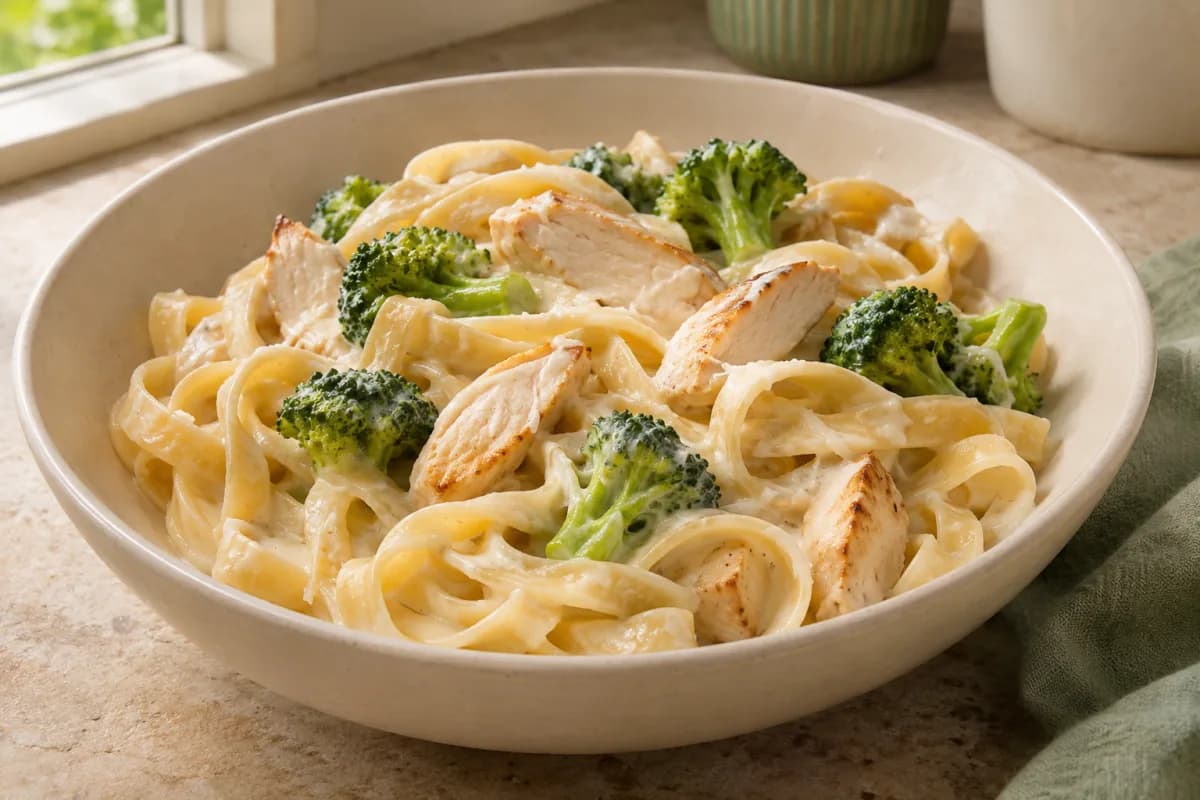
This is a cream-based chicken broccoli Alfredo with fettuccine, not a baked casserole or a claim about traditional Roman Alfredo. The broccoli stays in visible florets. Chicken is cut into strips after cooking, and the sauce uses butter, cream and finely grated Parmesan without added herbs.
The goal is enough sauce to coat the noodles without leaving them floating. That balance depends on the pasta shape, cheese and water added at the end. Add the water gradually, since different noodles and cheeses will need different amounts.
Ingredients
Makes approximately four main-course portions.
- 10 ounces (280 g) dry fettuccine
- 12 ounces (340 g) trimmed fresh broccoli florets
- 1 pound (450 g) boneless, skinless chicken breast
- 1 tablespoon (15 ml) olive oil
- 2 tablespoons (28 g) unsalted butter
- ¾ cup (180 ml) heavy cream
- 2½ ounces (70 g) Parmesan, finely grated
- ½ teaspoon fine salt, divided, plus salt for pasta water
- ¼ teaspoon ground black pepper
- Up to ¾ cup reserved pasta water, added only as needed
This list contains milk and wheat. Cheese and packaged ingredient labels should be checked for other allergens. A green salad or a small bowl of simply cooked vegetables makes an easy accompaniment without adding another rich sauce.
You need a large pasta pot, colander, broad skillet, tongs, a food thermometer and separate boards or properly cleaned work surfaces for chicken and vegetables.
How should the ingredients be prepared?
Wash ordinary fresh broccoli under running water and dry it, following FDA produce guidance. Cut the florets to about an inch across, splitting thick stems. The floret-cutting guide helps keep the pieces useful for a forkful of pasta.
Prepare vegetables before handling raw chicken, then clean the board and utensils between tasks. Do not rinse raw chicken: CDC guidance explains that splashing can spread germs. Keep the chicken's packaging and juices away from the grated cheese and cooked food.
Divide very thick chicken breasts horizontally into cutlets around ½ inch thick. Thickness, rather than the number of breasts in a pack, controls how evenly they cook. Pat with disposable towel, discard the towel and wash your hands before touching other ingredients.
Cooking order
Plan an initial 15 minutes for preparation and 20–25 minutes for cooking, with overlap between pans. The thermometer reading and pasta-package instructions take priority over the total time.
- Bring a large pot of water to a boil. Salt according to preference and the package instructions. Grate the Parmesan and place a heatproof measuring cup beside the pot for reserving water later.
- Season chicken with ¼ teaspoon of the measured salt and the pepper. Heat oil in the skillet over medium heat. Cook the cutlets, turning once the first side releases and browns. Start checking after several minutes on each side rather than assuming color means doneness.
- Insert a clean thermometer into the thickest part from the side. Cook until it reads 165°F (74°C). Transfer to a clean plate, then wash or change utensils that touched raw chicken.
- Add fettuccine to the boiling water and follow its package time. Add broccoli for an initial final two to three minutes, checking a piece before draining. Small florets soften faster, so lift one out and check it before draining the pot.
- Reserve ¾ cup pasta water, then drain the pasta and broccoli. Do not leave them soaking while the sauce cooks. If the chicken pan has burnt residue, clean it before starting the sauce.
- Melt butter in the skillet over low heat. Add cream and warm gently, stirring, until hot with small bubbles at the edges. Remove from the heat and stir in Parmesan gradually.
- Add pasta and broccoli. Toss gently, adding reserved water a tablespoon at a time until the sauce moves around the noodles. Slice the cooked chicken and fold it in with its collected juices. Taste before adding the remaining salt.
- Serve promptly in warm bowls. If reheating or returning cooled cooked ingredients to the dish, follow the leftover temperature guidance below instead of relying on a brief toss.
What makes the sauce easier to manage?
Keep the heat low once cheese enters the pan. A fiercely boiling sauce can become difficult to bring back together. Finely grated Parmesan spreads through the warm cream more readily than large pieces, and it gives you more control over how quickly the cheese joins the cream.
If the sauce becomes too thick, add reserved water gradually. If it looks loose, toss the pasta briefly and reassess before adding more cheese. The noodles continue absorbing moisture while the dish sits. A large splash of water followed by a large handful of cheese can create a cycle of adjustments.
If broccoli breaks apart, use a gentler turn with tongs and shorten its cooking time next time. For a different texture, cook broccoli separately using the steaming guide, drain well and add during the final toss.
Variations and leftovers
Short pasta is possible, but follow its package timing and check that sauce reaches the folds and centers. Keep the dry weight the same when changing the shape. If using frozen broccoli, use the frozen-broccoli guide for handling rather than assuming identical moisture and timing.
Refrigerate leftovers promptly in shallow containers. FoodSafety.gov's storage chart lists cooked meat or poultry leftovers for three to four days at 40°F (4°C) or colder. Reheat to 165°F (74°C). The sauce may need a small amount of milk or water and gentle stirring, although the noodles and broccoli will be softer than when freshly cooked.
How do you coat the pasta evenly?
Use tongs to lift and fold the noodles rather than stirring them in tight circles. Turn the bowl or pan as you work so sauce reaches the pasta at the edges. If the noodles seem dry, add a tablespoon of reserved water, toss and look again before adding more. Finish the plates while the pasta is still moving easily.
Common questions
Can you use already-cooked chicken?
Yes, as a separate variation with safe storage history. Reheat it thoroughly to the leftover temperature before serving; do not assume warm cream heats a cold chicken portion all the way through.
Can you make it ahead?
Prepare ingredients separately if useful. For the best texture, finish the pasta close to serving. Keep the grated cheese, prepared broccoli and raw chicken in separate covered containers in the refrigerator until you start.
Is browned chicken always cooked through?
No. Use the thermometer in the thickest part. Browning, clear juices and a timer cannot replace the temperature check.
References
- Centers for Disease Control and Prevention. (2024). Chicken and food poisoning. Retrieved November 4, 2026.
- FoodSafety.gov. (2024). Cook to a safe minimum internal temperature. Retrieved November 4, 2026.
- FoodSafety.gov. (n.d.). Cold food storage chart. Retrieved November 4, 2026.
- U.S. Food and Drug Administration. (n.d.). Selecting and serving produce safely. Retrieved November 4, 2026.