
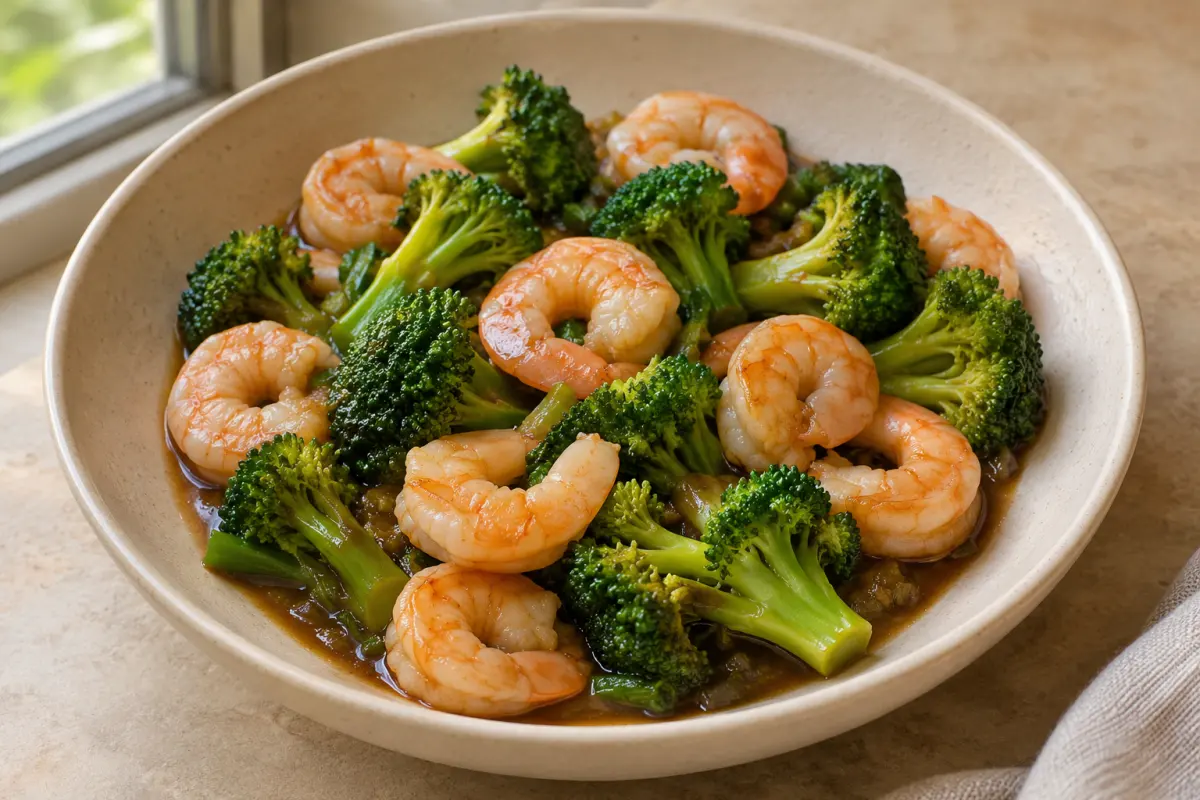
The pan gets busy very quickly once the shrimp goes in. Have the sauce mixed and the broccoli cut before turning on the heat. That little bit of order gives both ingredients some attention instead of leaving one waiting while the other overcooks.
How do you cook shrimp and broccoli together?
The broccoli gets a short covered steam so its stems have time to soften. The shrimp then has room to cook in a mostly dry pan. Finish the sauce before returning both ingredients, so neither sits in the heat while you adjust its thickness.
What goes into the stir-fry?
For four servings, gather:
- 450 g raw shrimp, peeled and deveined, weighed after preparation; use a 21–25 count-per-pound size
- 450 g broccoli, cut into small florets with thinly sliced peeled stems
- 1 tablespoon neutral cooking oil, divided
- 3 tablespoons water for steaming the broccoli
- 2 garlic cloves, finely chopped
- 1 teaspoon finely grated fresh ginger
For the sauce, mix:
- 90 ml water
- 2 tablespoons reduced-sodium soy sauce
- 1 tablespoon rice vinegar
- 2 teaspoons brown sugar
- 2 teaspoons cornstarch
Use a wide, lidded skillet, roughly 30 centimetres across, plus separate clean plates for cooked food. The sauce contains soy and may contain wheat. Shrimp is shellfish. Check every packaged ingredient before offering the dish to someone with an allergy.
Reduced-sodium soy sauce still contributes salt. Taste the finished sauce before adding any extra. Garlic, ginger and rice vinegar give the sauce its character without a long list of condiments. Keep the sauce light enough to coat the food rather than filling the bottom of the bowl.
How should you prepare the shrimp and broccoli?
Thaw frozen shrimp in the refrigerator. For a faster option, follow FoodSafety.gov's seafood-handling guidance for a sealed bag in cold water, changing that water every 30 minutes, then cook promptly. Do not thaw seafood on the kitchen counter.
Pat the prepared shrimp dry with clean paper towel. Keep it chilled while making the sauce and cutting the vegetables. Wash hands, utensils and surfaces after handling raw seafood; keep its juices away from ready-to-eat food.
Aim for broccoli florets about three centimetres across. Slice peeled stems about three millimetres thick so they have a reasonable chance of finishing with the tops. Our broccoli cutting guide helps separate those two jobs.
Stir the sauce again immediately before pouring it into the pan. Cornstarch settles while you work. A smooth mixture at the start saves you chasing little pale clumps later.
How do you make the stir-fry?
- Put the broccoli and three tablespoons of water in the skillet over medium-high heat. Cover and start checking after two minutes. Look for a stem that takes a fork with a little resistance; it will return to the pan at the end. Add a small splash of water if the pan dries before that point.
- Transfer the broccoli to a clean plate. Let remaining water evaporate, then add half the oil. Arrange the shrimp in one layer. Work in batches if they overlap heavily.
- Cook the shrimp, turning as needed. Begin checking after about one minute per side, but let their size and doneness guide you. Continue cooking until the shrimp is done; the time will vary with its size and the heat of your pan. Transfer fully cooked shrimp to a second clean plate.
- Lower the heat to medium. Add the remaining oil, garlic and ginger. Stir briefly until fragrant without letting the garlic darken.
- Stir the sauce mixture and pour it in. Stir as it heats and thickens. Start checking after about a minute; it should lightly coat a spoon rather than become a sticky paste.
- Return the broccoli and cooked shrimp. Toss just long enough to coat and warm them, then serve promptly.
FoodSafety.gov's temperature chart describes cooked shrimp flesh as pearly or white and opaque. Its seafood guide gives 145°F, or 63°C, as the general internal-temperature guidance for most seafood. Check the thickest part where your thermometer can take a reliable reading. A pink surface or a curled shape alone is not enough.
How do you fix a watery or sticky sauce?
Look at what entered the pan. Wet shrimp, ice on frozen broccoli and a puddle left from steaming can dilute a small sauce batch. Drain the broccoli well and let the pan water evaporate before cooking the shrimp.
If the sauce is thin, give it a little more time at a gentle bubble while stirring. If it becomes too thick, stir in water a teaspoon at a time. Do this before returning the shrimp so the seafood is not sitting in the pan during adjustments.
If the garlic scorches, start that sauce stage again in a clean pan. More sugar will not remove the bitter taste. For a vegetable-only approach to pan control, see our sautéed broccoli guide.
What can you serve alongside it?
Plain rice or noodles can sit underneath the stir-fry, and can stretch the meal to suit different appetites. Cook them first so the finished shrimp does not wait around while the starch finishes.
A different shrimp size will change the cooking checks. A larger family batch may need two rounds in the pan. Leave room between the shrimp rather than doubling everything in an already crowded skillet. Transfer each cooked batch to a clean plate while finishing the rest.
What about leftovers?
Divide leftovers into shallow containers and refrigerate promptly. FoodSafety.gov advises against leaving perishable seafood out longer than two hours, or one hour above 90°F. Reheat leftovers to 165°F, checking with a thermometer. Reheat only the portion you plan to eat, and stop cooking once it reaches that temperature so the shrimp does not spend extra time in the heat.
Our broccoli storage guide covers vegetable handling, but seafood guidance takes priority for this mixed dish.
Common questions
Can I use cooked shrimp?
Use the package directions for ready-cooked shrimp. Skip the raw-shrimp cooking stage and add it at the end only as directed for that product. Keep it chilled until needed. Repeatedly cooking ready-cooked shrimp can make it firm and chewy.
Can I skip the broccoli's first cooking stage?
Keeping the separate stage is the simpler choice. Thick broccoli and delicate shrimp rarely need identical treatment. Small florets and thin stem slices help the broccoli finish evenly without keeping the shrimp in the pan longer than necessary.
Can I prepare anything ahead?
Cut the broccoli, chop the aromatics and mix the sauce ahead, keeping each covered and refrigerated. Keep raw shrimp separate. Stir the sauce thoroughly when you are ready to use it, because the cornstarch settles while it stands. Have the serving bowls ready before the skillet gets hot.
Sources
- FoodSafety.gov. Safe selection and handling of fish and shellfish. https://www.foodsafety.gov/blog/safe-selection-and-handling-fish-and-shellfish
- FoodSafety.gov. Cook to a safe minimum internal temperature. https://www.foodsafety.gov/food-safety-charts/safe-minimum-internal-temperatures