Broccoli vs Cauliflower Nutrition: Which Is Actually Healthier?
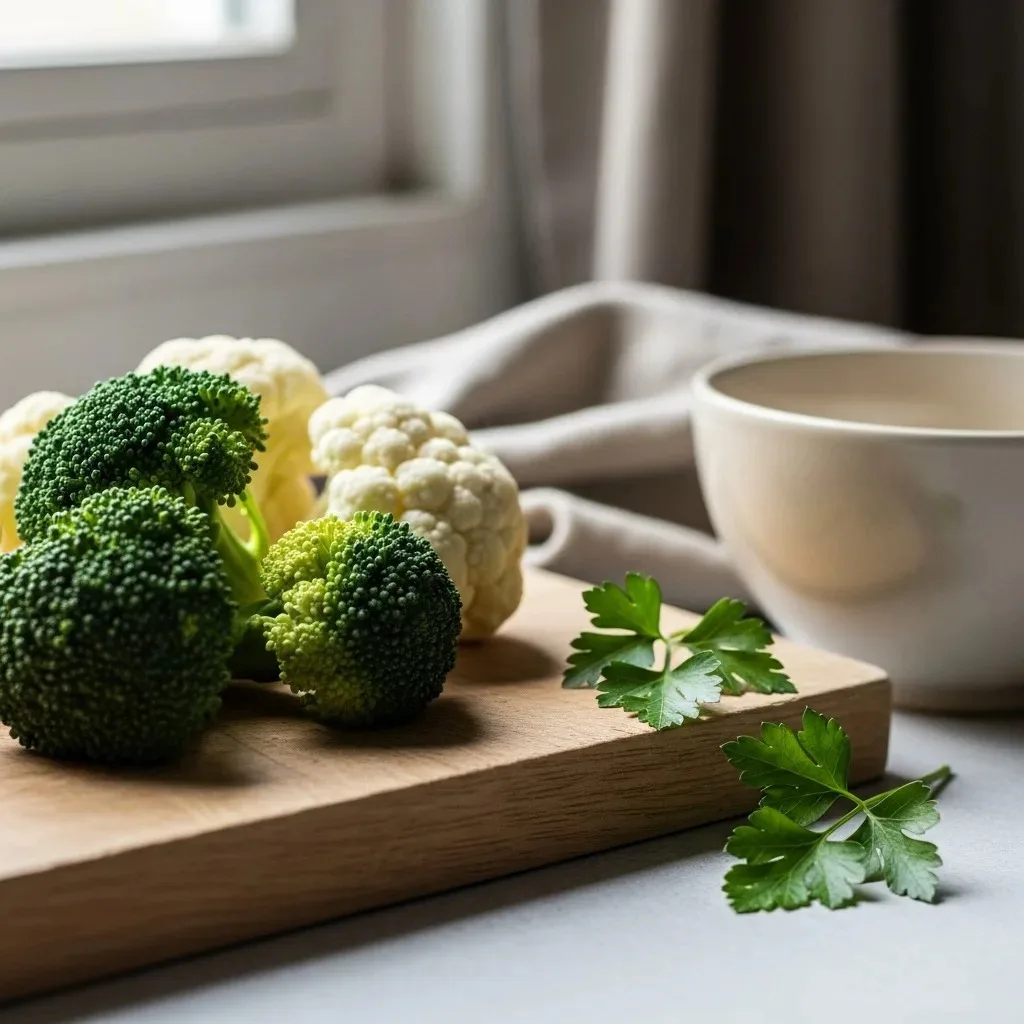
Adam ate broccoli like it was his job until he turned eight. We called it “little trees” and he finished his plate before we sat down. Then 2023 happened and he decided, overnight, that broccoli was the worst thing on earth. I tried everything. So I started sneaking cauliflower into everything instead. Mashed. Riced. Blended into pasta sauce. The thing disappears when you cook it right. That phase made me actually look up the numbers side by side, because I needed to know what I was trading away.
Quick Answer
Broccoli wins on almost every nutrition measure. Nearly double the vitamin C of cauliflower, six times more vitamin K, more protein, more fiber, and more beta-carotene. Cauliflower has slightly fewer calories and carbs. If your goal is nutrients per bite, broccoli wins. If the only way to get vegetables into someone is cauliflower, that is still a good trade.
Which is healthier for you, cauliflower or broccoli?
Broccoli, and it's not particularly close. Per 100g raw, broccoli has 89.2mg of vitamin C (99% of the daily value) versus cauliflower's 48.2mg (USDA FDC 170379). Vitamin K: 102mcg versus 15.5mcg. Protein: 2.82g versus 1.90g. Fiber: 2.6g versus 2.0g. Calcium: 47mg versus 22mg.
The one category where cauliflower leads is calories: 25 kcal per 100g versus broccoli's 34 kcal (USDA FDC 170379). That matters if you're eating cauliflower rice by the bowl, but the difference per serving is modest.
Nutrition per 100g raw:
Source: USDA FoodData Central FDC ID 170379 (broccoli); USDA Standard Reference (cauliflower)
| Nutrient | Broccoli | Cauliflower | Winner |
|---|---|---|---|
| Calories | 34 kcal | 25 kcal | Cauliflower (lower) |
| Protein | 2.82g | 1.90g | Broccoli |
| Fiber | 2.6g | 2.0g | Broccoli |
| Vitamin C | 89.2mg (99% DV) | 48.2mg (54% DV) | Broccoli |
| Vitamin K | 102mcg (85% DV) | 15.5mcg (13% DV) | Broccoli |
| Folate | 63mcg | 57mcg | Broccoli (slightly) |
| Calcium | 47mg | 22mg | Broccoli |
Which has more vitamin C: broccoli, cauliflower, or an orange?
This surprised me. I was comparing produce labels at FairPrice in Singapore. Broccoli has 89.2mg of vitamin C per 100g (USDA FDC 170379). A medium orange sits around 53mg. Cauliflower is 48.2mg (USDA Standard Reference).
Broccoli beats an orange on vitamin C. By a lot. And almost nobody knows this.
My boys get a meaningful vitamin C hit from a side of broccoli with dinner, more than from a glass of juice. Fine by me. Juice has all the sugar and none of the fiber.
What is sulforaphane and which vegetable has more of it?
Sulforaphane forms when glucoraphanin (stored in the vegetable) meets myrosinase (an enzyme in the same cells). Chopping or chewing releases both. They react. Sulforaphane forms. Broccoli has significantly more glucoraphanin than cauliflower.
Here's what no one tells you: you can eliminate all of this with how you cook. Boiling broccoli for more than one minute destroys myrosinase (PMID 32328271, 2020). No enzyme, no reaction, no sulforaphane.
The chop-first hack
Chop the broccoli first. Wait 40 minutes. Then cook. That window lets the myrosinase reaction complete before heat kills the enzyme. I chop broccoli the moment I get home from the supermarket, leave it on the board while I unpack, and cook it later. Zero extra time, much better nutrition.
Does cooking destroy vitamins in broccoli or cauliflower?
It depends on the method.
Vitamin C is water-soluble and heat-sensitive. Boiling sends it into the cooking water you pour away. Steaming and stir-frying lose much less. Vitamin K is fat-soluble and survives heat well. Fiber stays regardless of method.
The real loss with broccoli is sulforaphane, as above. Steam for 3 to 5 minutes or stir-fry for 2 minutes and you keep most of the nutrients. I do a lot of wok cooking with garlic and sesame oil. Adam, who refuses broccoli raw and roasted, will eat it that way. Alfi eats it any way I cook it. Different boys.
Is cauliflower better for weight loss or keto?
Both vegetables are very low calorie, so weight loss comes down to volume and satiety. Broccoli has more fiber (2.6g versus 2.0g per 100g, USDA FDC 170379), so it fills you up slightly more per gram.
For keto, cauliflower wins. Not because of the carb difference (roughly 3g net versus 4g per 100g), but because of how it behaves in keto cooking. It mimics rice. It works as mash. It holds fat well. Broccoli fits within keto limits too, but cauliflower has the functional edge in that style of eating.
Does cauliflower cause more gas than broccoli?
Both do. They're both high-FODMAP vegetables containing fermentable carbohydrates that gut bacteria break down, producing gas. Neither is easier on the stomach in that sense.
Cooking helps with both. Heat breaks down some of the fermentable fibers. Steaming or roasting either vegetable tends to reduce digestive impact compared to eating it raw. If you're FODMAP-sensitive, the choice between them matters less than portion size and cooking method.
Are broccoli and cauliflower the same plant?
Same species, different varieties. Both are Brassica oleracea. Broccoli was developed for its flower clusters; cauliflower for its dense white curd. Kale, Brussels sprouts, and cabbage are other varieties from the same species. This is why broccoflower and Romanesco exist: crosses within the same plant family.
Frequently Asked Questions
Is broccoli good for blood sugar and A1C?
Research suggests a link. A 2012 randomized controlled trial found that 10g of broccoli sprout powder daily for four weeks reduced fasting blood glucose by about 1.9 mmol/L (ScienceDirect, 2012). Broccoli is also high-fiber and low on the glycemic index. It's not a treatment, but it's a smart dietary choice if blood sugar is a concern.
Can I substitute cauliflower for broccoli in recipes?
Usually yes. Cauliflower is milder and holds its shape well when roasted. In soups, stir-fries, and pasta dishes, they swap well. Raw broccoli has more textural presence in salads. The flavor difference is real but not dramatic.
Which is better for kids who won't eat vegetables?
Cauliflower, because it disappears. Riced into fried rice, blended into sauce, hidden in a pasta base. Broccoli's stronger flavor and color make it harder to conceal. My honest answer: cauliflower is the Trojan horse for resistant eaters. Use it. Work on broccoli when you have more ground to stand on.
How well does broccoli calcium absorb?
Better than most plant sources. Research by Weaver et al. (1990, American Journal of Clinical Nutrition) found broccoli calcium absorbs at roughly 53%. That's higher than many plant-based sources, making broccoli (47mg per 100g, USDA FDC 170379) a meaningful calcium contributor.
Sources
- USDA FoodData Central, FDC ID 170379 (broccoli, raw)
- USDA Standard Reference (cauliflower, raw)
- PMID 32328271: Myrosinase activity and cooking methods, 2020
- ScienceDirect: Broccoli sprout powder RCT, blood glucose, 2012
- Weaver CM et al.: Calcium bioavailability from broccoli, American Journal of Clinical Nutrition, 1990