
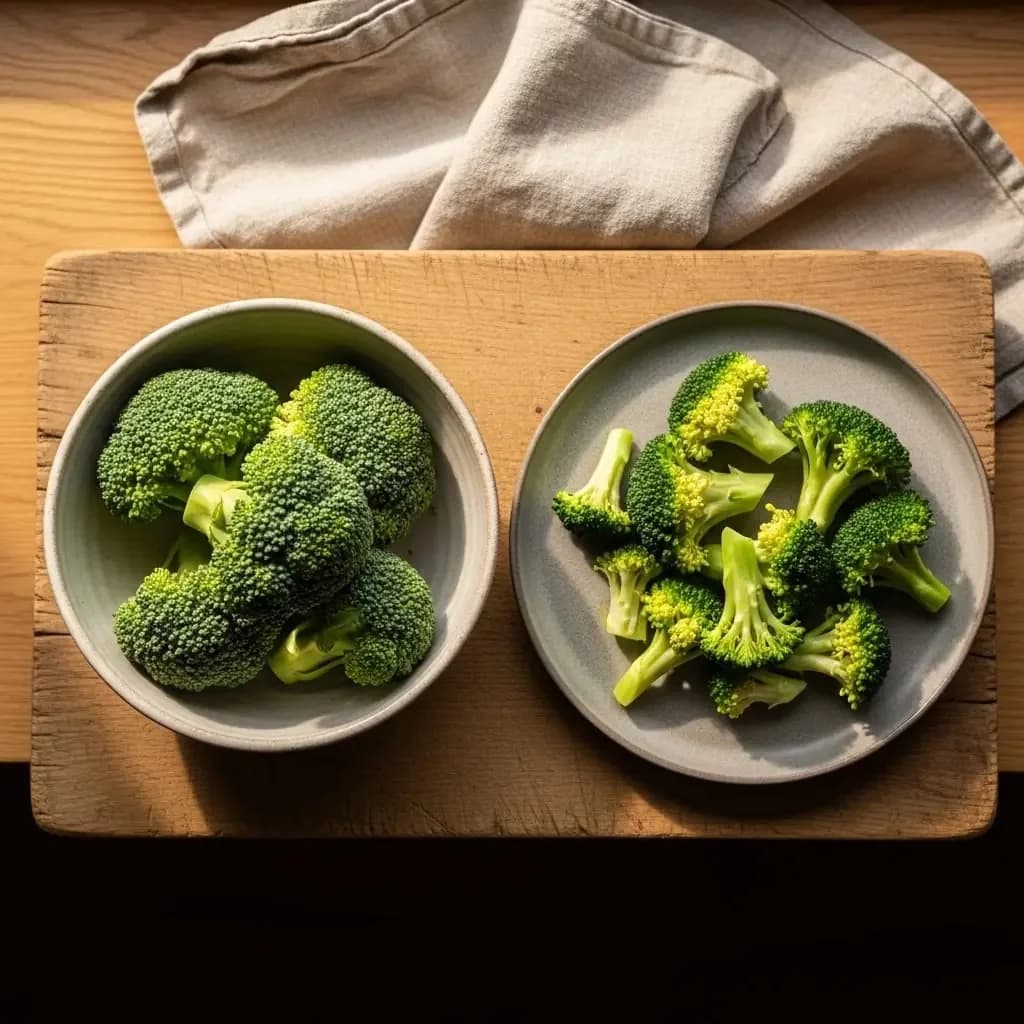
Is It Healthier to Eat Broccoli Cooked or Uncooked?
Back in 2022, Adam decided he would only eat broccoli one way: straight from the bag, raw, dunked in hummus. I let it go. He was eating broccoli and that was enough. But then I read something about sulforaphane and started spiraling at 11pm over PubMed abstracts about enzymes. My real worry: was steaming it for dinner actually making it worse than Adam's bag method?
Quick Answer: Both raw and cooked broccoli have genuine nutritional value. Raw preserves more vitamin C and produces more sulforaphane. Lightly steamed or microwaved broccoli increases the bioavailability of lutein, zeaxanthin, and beta-carotene. Boiling is the one method that hurts almost everything.
Raw broccoli gives you 89.2mg of vitamin C per 100g — more than an orange at 53mg per 100g (USDA FDC 170379). It also keeps myrosinase active, the enzyme needed to convert glucoraphanin into sulforaphane, which is the compound most of the interesting broccoli research actually studies.
Cooked broccoli is denser, so a single cup carries more total nutrients by weight. One cup cooked delivers 101mg vitamin C (112% DV), 110mcg vitamin K (92% DV), 168mcg folate (42% DV), and 5g fiber (USDA FDC 169967). Those numbers look bigger because there is simply more broccoli per cup after it softens.
The real split: raw wins for sulforaphane potential and vitamin C per gram. Cooked wins for carotenoid bioavailability and digestibility. Neither is flatly better.
What Nutrients Does Cooking Destroy in Broccoli?
The two most vulnerable are vitamin C and myrosinase.
Vitamin C is water-soluble and heat-sensitive. Boiling cuts it by up to 50%, with most leaching straight into the cooking water rather than into you. Myrosinase is an enzyme — and enzymes are proteins. Heat above roughly 70°C denatures it. No myrosinase, no sulforaphane. The chain is: glucoraphanin plus myrosinase, triggered by chopping or chewing, produces sulforaphane. Kill the enzyme, break the chain.
Vitamin K is stable across all cooking methods. Folate and fiber are largely retained with quick cooking.
Raw broccoli data: USDA FDC ID 170379. Cooked broccoli (boiled) data: USDA FDC ID 169967, corroborated by UPMC HealthBeat (2024).
| Nutrient | Raw per 100g | Cooked per cup | Heat Stability |
|---|---|---|---|
| Vitamin C | 89.2mg (99% DV) | 101mg (112% DV) | Low |
| Vitamin K | 102mcg (85% DV) | 110mcg (92% DV) | High |
| Folate | 63mcg (16% DV) | 168mcg (42% DV) | Medium |
| Fiber | 2.6g | 5g | High |
| Sulforaphane activity | High | Low to none | Enzyme-dependent |
What Is the Healthiest Way to Cook Broccoli?
Steaming causes the lowest loss of glucosinolates compared to boiling, stir-frying, and the stir-fry-then-boil method. Yuan et al. (2009) tested five cooking methods on broccoli and concluded steaming was optimal for preserving health-promoting compounds (Journal of Zhejiang University Science B, PMC2722699, cited 389 times).
Microwaving is the counterintuitive one. A 2020 study in Food Science and Nutrition found that moderate microwave heating at around 60°C raised sulforaphane yield by approximately 80% compared to conventional heating methods (PubMed 32328271). Low-to-moderate heat briefly accelerates myrosinase before the temperature crosses 70°C and the enzyme stops working. Short burst, minimal water, and you can actually get more sulforaphane from microwaved broccoli than raw if the timing is right.
Boiling is the worst option. Water-soluble vitamins leach directly into the water. If you must boil, save the cooking liquid and add it to a soup — most of the vitamin C went in there.
Best to worst: hack-and-hold then microwave (moderate) → steam (2–3 min) → raw (no wait) → stir-fry (brief) → boil → frozen (without fix). Boiling and blanched-frozen produce near-zero sulforaphane.
Does Cooking Destroy Sulforaphane in Broccoli?
Sulforaphane is not pre-formed inside broccoli. It does not exist until you break a cell wall by cutting or chewing. That physical damage causes glucoraphanin and myrosinase to mix, and the conversion begins. At room temperature, it takes about 40 minutes to peak.
When you cook immediately after cutting, heat kills the enzyme before the reaction finishes. Cook-first, blend-after has the same problem.
The fix is the hack-and-hold technique. Chop the broccoli first. Leave it for 40 minutes. Then cook. The sulforaphane is already formed before heat arrives, and it survives light cooking (NutritionFacts.org, wsN8x0BWcyE). I reorganized my weeknight prep around this: cut the broccoli first, set it aside, start the rest of dinner, add the broccoli last.
Cut broccoli first. Walk away for 40 minutes. Cook it last. That single habit is worth more than any supplement.
What About Frozen Broccoli?
Commercially frozen broccoli is blanched before freezing. That step deactivates enzymes to extend shelf life. The myrosinase is already gone before the bag ever reaches your freezer. The glucoraphanin survived, but has no enzyme to work with, so frozen broccoli produces essentially zero sulforaphane (NutritionFacts.org, wsN8x0BWcyE).
I used to default to frozen for weeknight dinners with Alfi. Now I know that for sulforaphane specifically, frozen is a dead end unless you use the mustard powder fix.
A quarter teaspoon of dry mustard powder per 7 cups of cooked or frozen broccoli, added after cooking, restores sulforaphane production. Mustard seeds contain active myrosinase that converts remaining glucoraphanin even after the broccoli has been fully cooked. You can also mix in a small handful of fresh raw broccoli, or add grated daikon or horseradish — all cruciferous, all packed with myrosinase.
Mustard powder · daikon radish · horseradish · wasabi · raw mustard greens. A small amount of any of these added to cooked or frozen broccoli restores sulforaphane production.
What Cooking Actually Does Better Than Raw
Lutein, zeaxanthin, and beta-carotene are fat-soluble carotenoids. Raw broccoli contains 1,400mcg of lutein and zeaxanthin per 100g (USDA FDC 170379). These matter for eye health. But fat-soluble compounds absorb better when cell walls are softened and fat is present. Lightly steamed broccoli with a drizzle of olive oil delivers more bioavailable carotenoids than the same broccoli eaten raw without fat.
Digestibility is the other one. Raw broccoli's fiber structure and natural sugars cause bloating in some people. Light steaming softens that without significant nutrient loss. Honestly, this is the argument for cooked that most articles forget to make: bioavailability matters as much as content on paper.


